- Free shipping from 990 sek (within Sweden)
- Municipality and Company


First aid
In a crisis situation where social functions do not work, health centres and hospitals will quickly become overloaded. Since roads can be difficult to access and public transport inaccessible, it can also be difficult to reach the care you need in time.
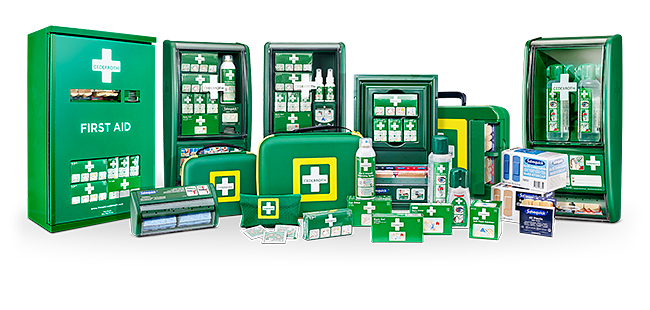
Both large and small injuries can have serious consequences. A deep cut with excessive bleeding can quickly become severe just as a small infected abrasion can become severe over time. The ability to nurture oneself in both large and small incidents can therefore be crucial and a first aid kit can be invaluable. Inventory and get to know your first aid kit. Feel free to supplement with, for you necessary medications so you can manage over a period of time
How to deal with wound injuries
Here we want to give some advice and practical tips on how best to care for a wound injury. To avoid infections in the event of an injury, it is important to clean as soon as possible. Remove any glass, gravel or other stuff stuck in the wound by flushing it away, then clean it with a wound wash or any mild soap. Also be sure to clean the skin around the wound as well.
Minor cuts
If emergency care is available, seek medical attention in case of major injuries. Smaller cuts are flushed cleanly and hold the edges together. Keep the damaged site as high as possible to stop the blood flow and apply pressure using a clean compress until the bleeding stops. Try to tighten the wound edges by attaching a patch to one side and then stretch it over the wound where you attach the other part. Surgical tape and strips also work. Let sit for a few days to give the body time to heal.
Deep cuts
Deep cuts should be sewn within 6 hours. Therefore, it is always best to seek care in case of deep cuts, especially if the injuries are on the hands. If after a cut in your hand you have difficulty moving your fingers without violent pain, you should always seek emergency care as you may have damaged your joints.
Major wounds and bleeding
Here you use the larger compresses, sometimes several. Use your surgical tape to attach the compress and if you need more than tape, use gauze to wrap around. If it bleeds heavily from the wound, so that it squirts or pulses, you have probably damaged a larger artery. The injured person should be put down and the injured body part should be kept high. To stop bleeding, apply pressure over the wound using a pressure dressing, a first dressing or cotton rolled tightly to a compress. Around the pressure dressing, roll gauze without adding too much pressure. In the event of such a serious injury, emergency care should be sought as soon as possible and please call emergency number for immediate assistance.
Moist wounds heal fastest
In a humid environment, new cells are formed faster, which means that wounds heal faster and thus also reduce the risk of infection. On infected wounds you should never put on patches, but on properly cleaned surfaces you can today put on special patches that are extra thin and that replace the wound crust. These patches are pliable and water-proof so you can shower and bathe with them.
When the wound heals, several things happen
Through a series of things, the body begins to repair itself. Platelets and red blood cells turn into a scab. Fibrinogen leaks out of the blood vessels and forms fibrin that becomes a kind of mesh that captures the blood cells. Next, white blood cells flow to the area to take up the fight with any bacteria. Now the skin around the wound area can become a little red – an inflammation has developed, the body's normal way of healing out a wound injury.
If the redness becomes severe, the wound should be treated continuously with wound wash. Rinse with wound wash or dab with cotton soaked in wound wash. If the wound begins to be severe and streaks up towards lymph nodes associated with fever develop, then it is a clear sign of a serious infection and medical attention should be sought.