- Free shipping from 990 sek (within Sweden)
- Municipality and Company

.png?max-width=780&max-height=312&quality=85)
Does respirator work against Covid-19?
The use of a breathing mask to protect against Covid-19 has become a hot issue in connection with the pandemic outbreak. Opinions about the use and how well the masks actually protect are wildly different, but opinions may not always be based on pure facts.
Do the protectors stop viruses, like Corona? The answer is absolutely, yes. If protection is designed for protection against viruses, the virus particles are largely filtered out. If you're 100% safe, just because you're wearing a respirator. The answer is, absolutely not. How to use the protection is absolutely crucial to the result.
Whether you use mouthguards or not, the recommendation is always to maintain good hand hygiene and distance from other people, at least one meter but preferably more. Good hand hygiene means washing your hands with soap and water or hand sanitizer with an alcohol content of more than 70% for at least 30 seconds repeated during the day.
How does viruses infect?
If someone has an infection of the airways – e.g. cold, flu or Covid-19, the infection can be passed on when the infected cough or sneeze. Particles are ejected in the form of droplets that contain infectious substances. A direct contact with the drops can transfer the infection to a healthy person, but also indirect contact can be contagious. Thus, that the drops landed on surfaces and objects, where we then bring our hands; the same hands and fingers that we soon use to scratch our eyes or poke our noses.
A handful of published studies have also recently shown that coronavirus is airborne, which means that the infection is found in very small particles. The difference with drip infection is that an infected person can pass on the virus only through calls and the small particles (aerosols) present in the exhaled air. Another difference is that aerosols stay in the air longer (smaller particles stay in the air longer and can be more easily dispersed via e.g. ventilation in a house)
What does WHO say?
The World Health Organization (WHO) recommends the protection of protection class FFP2, but also protection with a lower protection class can help reduce the spread of infection, mainly because the infected limit the spread. Watch video with recommendations on the use of mine protection from WHO
How do the masks work?
What are the different protections and what do the different protection classes mean? They are available in three different levels, with or without breathing valves and are assessed according to a so-called nominal protection factor. (A factor measured under laboratory conditions. So not measured in a real working environment, which is important to consider.)
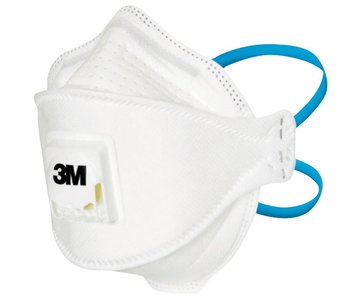
FFP1 filters are the lowest level. The half-mask filters 80% of impurities in the form of particles. The nominal protection factor is 4.
FFP2 filters are the mid-range. The half-mask filters 94% of impurities in the form of particles. This filter also has the global name KN95 and is recommended as the minimum protection of the WHO. The nominal protection factor is 12.
FFP3 filters are the highest class on particle filters. The half-mask filters 99% of the impurities in the form of particles. This protection has a nominal protection factor of 50.
Thus, we can absolutely say that these protections filter out both drops and aerosols containing coronavirus. However, it is very important to point out that the protections must be used correctly and for a limited time. Most covers are intended for use for about 8-10 hours and should then be discarded. The function of the guards is also based on the fact that they only let air through the filtering material. If you have a protection that does not close tightly to the face or e.g. beard growth, you quickly lose the function of the protection. Also how to take the protection off and on protection is crucial as potential infection can be present in the protection itself after use. Never touch the cover itself without the straps that hold the guard in place, the wash your hands with soap and water or hand sanitizer with an alcohol content of more than 70% for at least 30 seconds repeated during the day.
Who should have access to the respiratory protection?
Whether individuals should have access to protection or whether they should only be given priority to health care is also a hot question. By giving more individuals access to protection and these are used correctly in connection with the other recommendations regarding distance and hand hygiene, the spread of infection in society and thus also the pressure on health care is reduced.
Therefore, the question should not be of who should have access to protection, but how to give it to everyone, in order to work together to reduce dissemination. However, demand remains high, which not least shows by the cost of protection with the highest protection class. The cost of these protections is currently unreasonably high, but not everyone has a need for the highest level of protection. Even protection with a lower protection class reduces the spread when used correctly.
No matter what protection you use, it is again worth emphasising the importance of them being used properly. The mask should close tightly for both out and inhaled air and that other recommendations regarding distance and hand hygiene should be followed