Water Preparedness – When the Tap Runs Dry
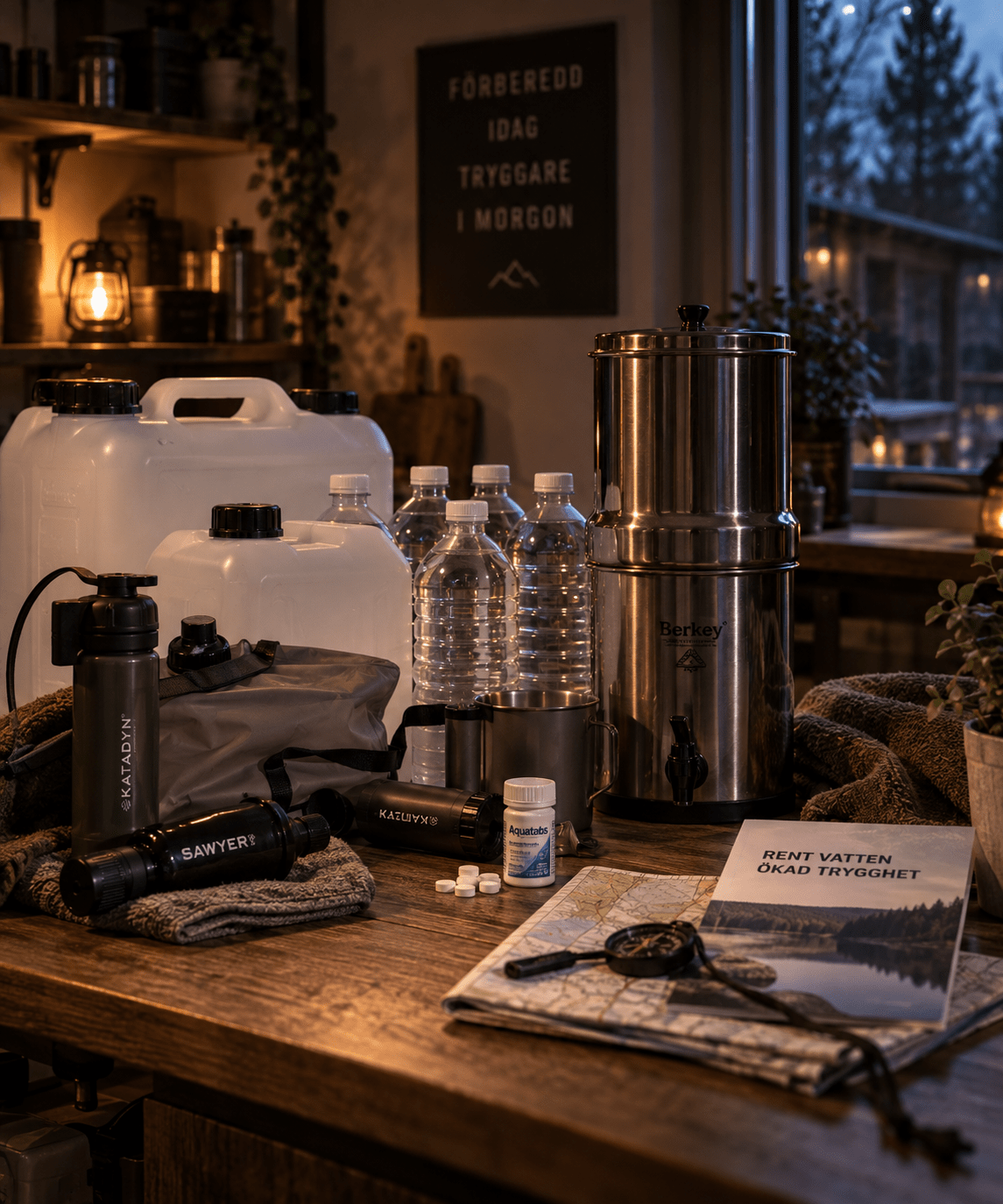
Clean drinking water is one of our most basic needs. During a major disruption, the water supply can be affected by power outages, leaks, contamination or other infrastructure problems.
That is why water should be one of the first things you plan for – at home, in the workplace and as part of your organisation's emergency preparedness.
Plan your water preparedness in three steps:
✦ Store water
✦ Be able to collect more
✦ Be able to purify water
How much water do you need?
MSB recommends allowing at least three litres of water per adult per day, primarily for drinking and cooking. When basic hygiene and other needs are included, the amount required may be higher. Children, pets, warm weather and physical activity also affect how much water is needed.
For two adults, three litres per person per day means at least 42 litres for one week – even before additional needs are taken into account.
For a workplace, organisation or emergency support centre, the volumes quickly become significantly larger. Water preparedness therefore needs to be planned based on the number of people, required duration, storage capacity and the ability to replenish supplies.
Do not just calculate litres. Also plan how the water will be stored, transported, distributed and, if necessary, purified.
Start by storing drinking water
The safest water during a disruption is the drinking water you already have available.
Store water in clean bottles or containers intended for food and drinking water, in a dark place and as cool as possible. MSB recommends checking stored water once or twice a year by smell and taste and replacing it if it is no longer good. At the same time, the Swedish Food Agency states that properly stored drinking water can be kept for a long time and that smell and taste, rather than a fixed time limit, determine its quality.
PET bottles can also be frozen. They can then act as ice packs during a power outage, and the water can be used once it has thawed. Do not fill the bottles completely, as water expands when it freezes.
How much water can be stored depends on the home or organisation. A few containers are better than none – but larger organisations normally need to plan for both storage and replenishment.
Be able to collect more water
During an extended water outage, the municipality may provide emergency water supplies. You then need to be able to collect and transport the water from the distribution point. MSB therefore recommends, among other things, bottles, water containers and buckets with lids.
For a household, this may mean having a few water containers. For a workplace, property or essential service, you also need to consider transport, internal distribution, staffing and the volumes that can realistically be handled.
During a prolonged disruption, other water sources may also become relevant. However, water from lakes, streams, rain or other sources should not be considered safe simply because it looks clean.
The ability to purify water is therefore a complement to stored water – not a substitute for planning.
Making water safe to drink
Different contaminants require different purification methods. Water may contain bacteria, viruses and parasites, as well as particles, chemicals, heavy metals and other contaminants.
There is therefore no single method that automatically makes all water safe to drink.
Boiling
Effective against microorganisms when water quality is uncertain. MSB recommends bringing the water to a vigorous boil. However, boiling does not remove salts, heavy metals or chemical contaminants, for example.
Water filters
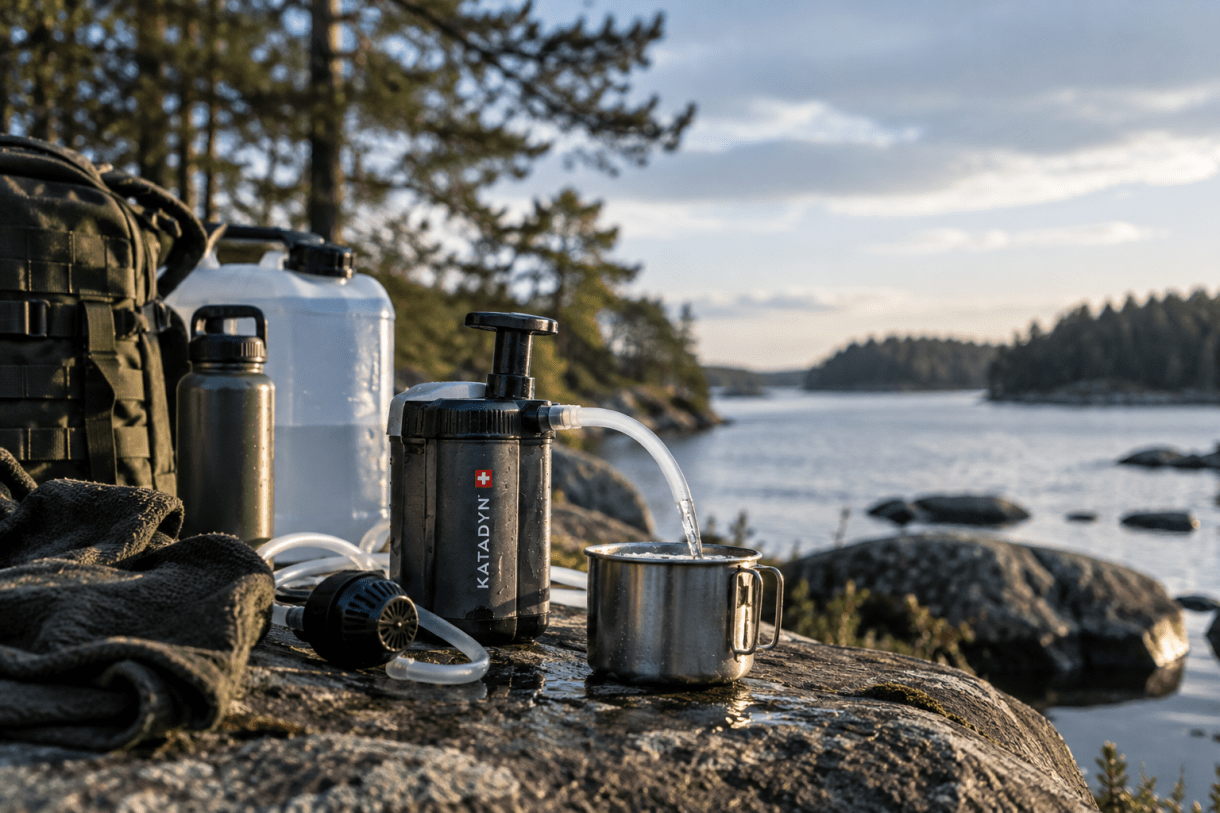
Filters work in different ways. Microfilters are generally designed to remove particles, protozoa and bacteria, while other technologies may also reduce viruses or certain chemical contaminants. Always check what the filter has actually been tested and specified to remove.
Chemical water treatment
Water purification tablets and other chemical methods can be used against microorganisms. However, they do not filter out sediment and particles. Always follow the product's dosage instructions and required contact time.
UV purification
UV light can deactivate microorganisms in clear water. However, the method does not remove sediment or chemical contaminants and requires a functioning power source.
What level of water preparedness do you need?
For most people, a combination is the best solution.
Store drinking water for the initial period.
Have containers available to collect and transport more.
Add water purification based on the alternative water sources that are actually available.
Start with your own circumstances. How many people need water? How long should your supplies last? How much can you store? Where is the nearest alternative water source or emergency water distribution point? How will the water be transported and distributed?
For businesses, property owners, municipalities and other organisations, the same questions need to be addressed at a system level. Effective water preparedness may require everything from storage containers and transport solutions to larger-scale purification capacity and a plan for distributing drinking water when the normal supply is unavailable.
The important thing is not to prepare for every conceivable event. The important thing is to know where your water will come from when the normal water supply is unavailable.