Heating Preparedness – Stay Warm When the Power Goes Out
For much of the year, heating is an important part of emergency preparedness in Sweden. During an extended power outage, many heating systems may stop working – even systems that use other energy sources can depend on electricity for pumps, controls or ventilation.
How quickly a building becomes cold depends on the season, outdoor temperature, insulation, the size of the building and the type of heating system used.
It is therefore a good idea to know in advance how you would keep people warm if the normal heating system stopped working.
Build your heating preparedness in three levels:
✦ Retain body heat
✦ Reduce heat loss
✦ Add safe alternative heating
Start by retaining the heat you already have
The first step is not necessarily to try to heat your entire home.
If the temperature starts to fall, it may be more effective to gather everyone in one room and close the doors to the rest of the home. Ideally, choose a smaller room with few windows and external walls.
Rugs on the floor and blankets over windows can help reduce heat loss. In very cold conditions, you can create a smaller enclosed space using blankets, for example, or even use a tent indoors. A smaller space is easier to keep warm using the body heat generated by the people inside.
The goal does not have to be keeping the entire home warm. Start by creating a smaller area where people can stay warm.
Clothing, sleeping bags and insulation
Good clothing is one of the simplest and safest forms of heating preparedness.
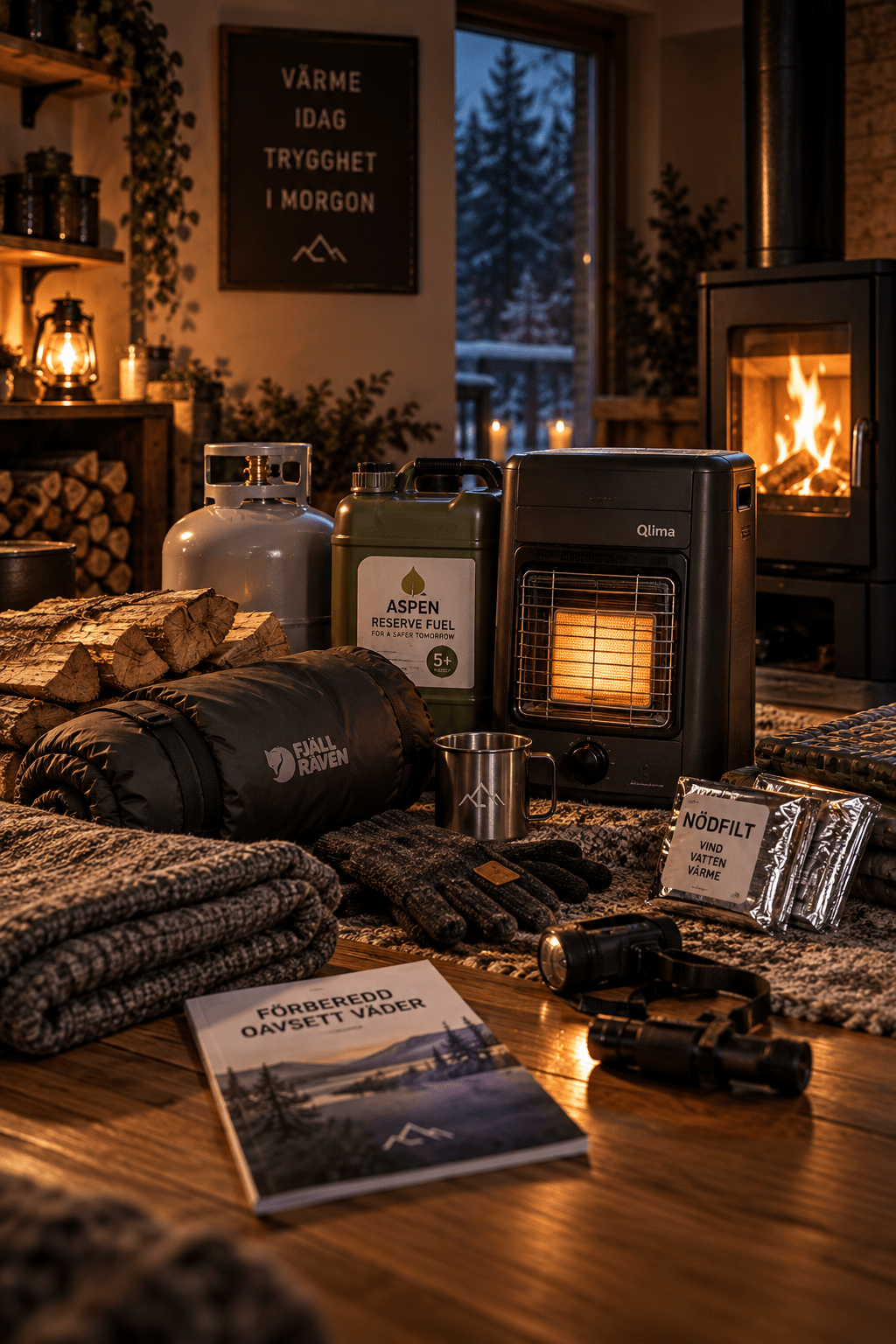
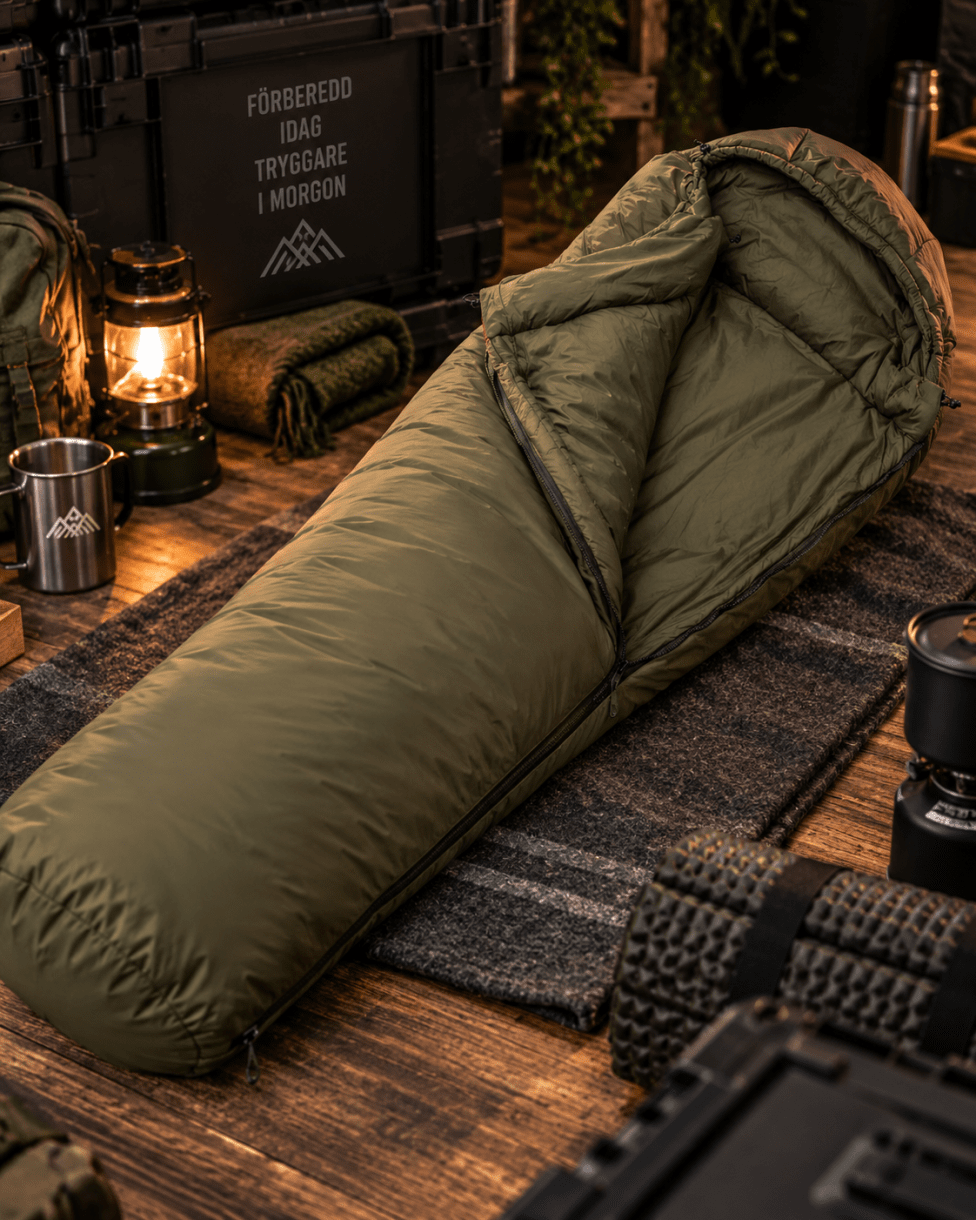
Dress in several layers and add warm socks, a hat and gloves when needed. Blankets and sleeping bags help the body retain heat, while a sleeping mat provides insulation from cold floors.
If you already have camping and outdoor equipment, you probably already have a good foundation for your home preparedness.
Retaining body heat requires neither electricity nor fuel.
Alternative heating
For greater resilience, an alternative heat source can be a valuable addition.
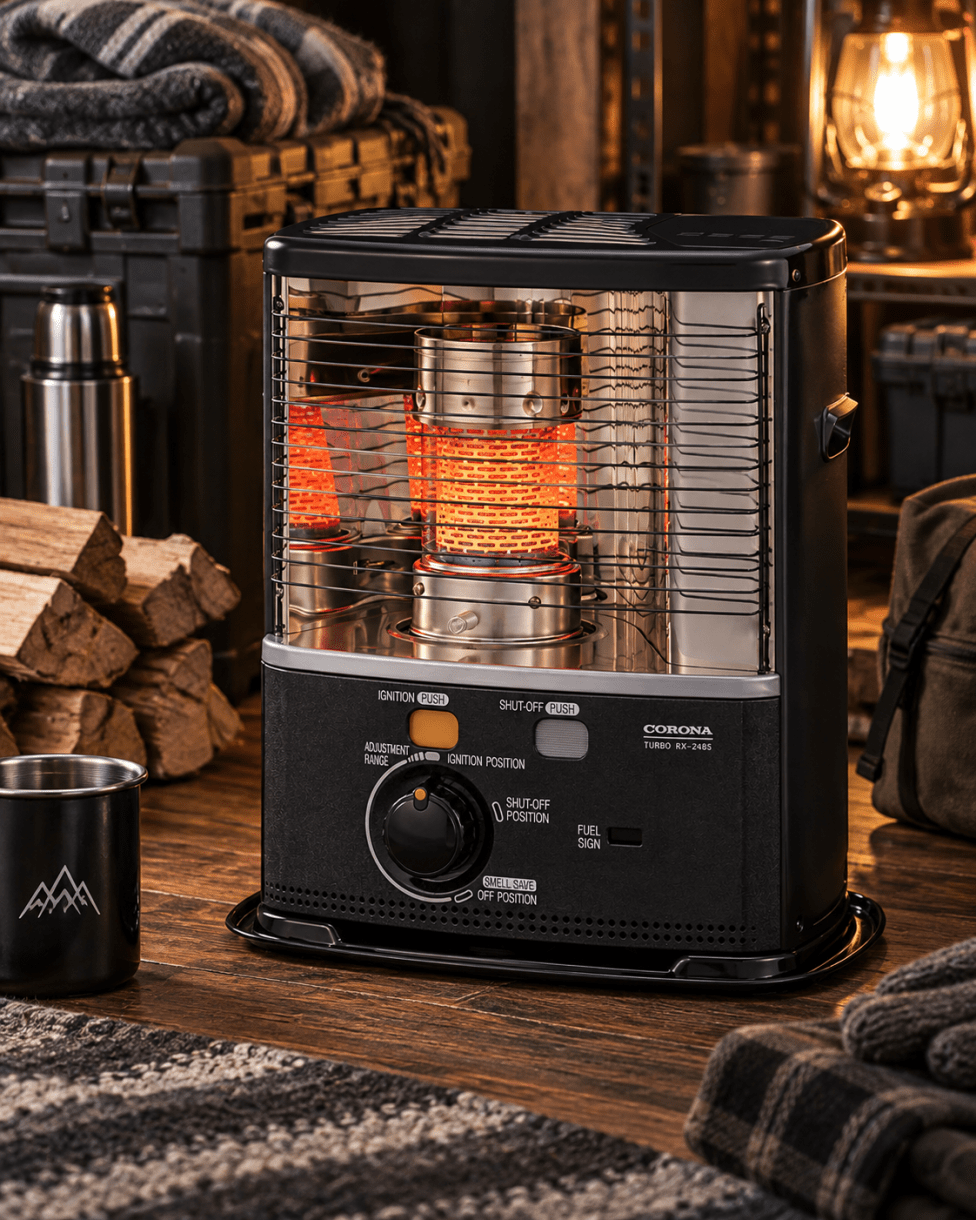
This could, for example, be a stove or heater powered by fuel rather than electricity. The most suitable solution depends on the building, ventilation options, fuel and how the equipment is designed.
Safety is critical here.
Ventilation
Combustion consumes oxygen and can produce carbon monoxide and other combustion gases. Always follow the manufacturer's requirements for ventilation and the environment in which the equipment may be used.
Fire risk
Maintain a safe distance from combustible materials and place the equipment on a stable surface. Keep working fire extinguishers and smoke alarms available.
Carbon monoxide
If a fuel-powered heat source is used in an occupied space, a carbon monoxide alarm is an important additional safety measure. Never use equipment in an environment for which it was not designed.
Plan for fuel
A heat source is only useful for as long as you have energy to power it.
If your backup solution uses LPG, kerosene or another fuel, the fuel itself also needs to be included in your planning. How much you need depends on the heater's fuel consumption, the desired temperature and how many hours per day it needs to operate.
You do not necessarily need to maintain a normal indoor temperature during an extended outage. The primary goal is to create a safe and sufficiently warm environment for the people staying there.
Calculate the entire chain: heat source + fuel + consumption + operating time.
Can backup power keep the heating running?
Backup power can be part of your heating preparedness, but start by finding out what your existing heating system actually requires.
Heat pumps, circulation pumps, pellet heating systems, control systems and ventilation may depend on electricity even when the heat itself comes from another energy source.
Therefore, check power requirements, starting currents and how long the system needs to operate before sizing your backup power solution.
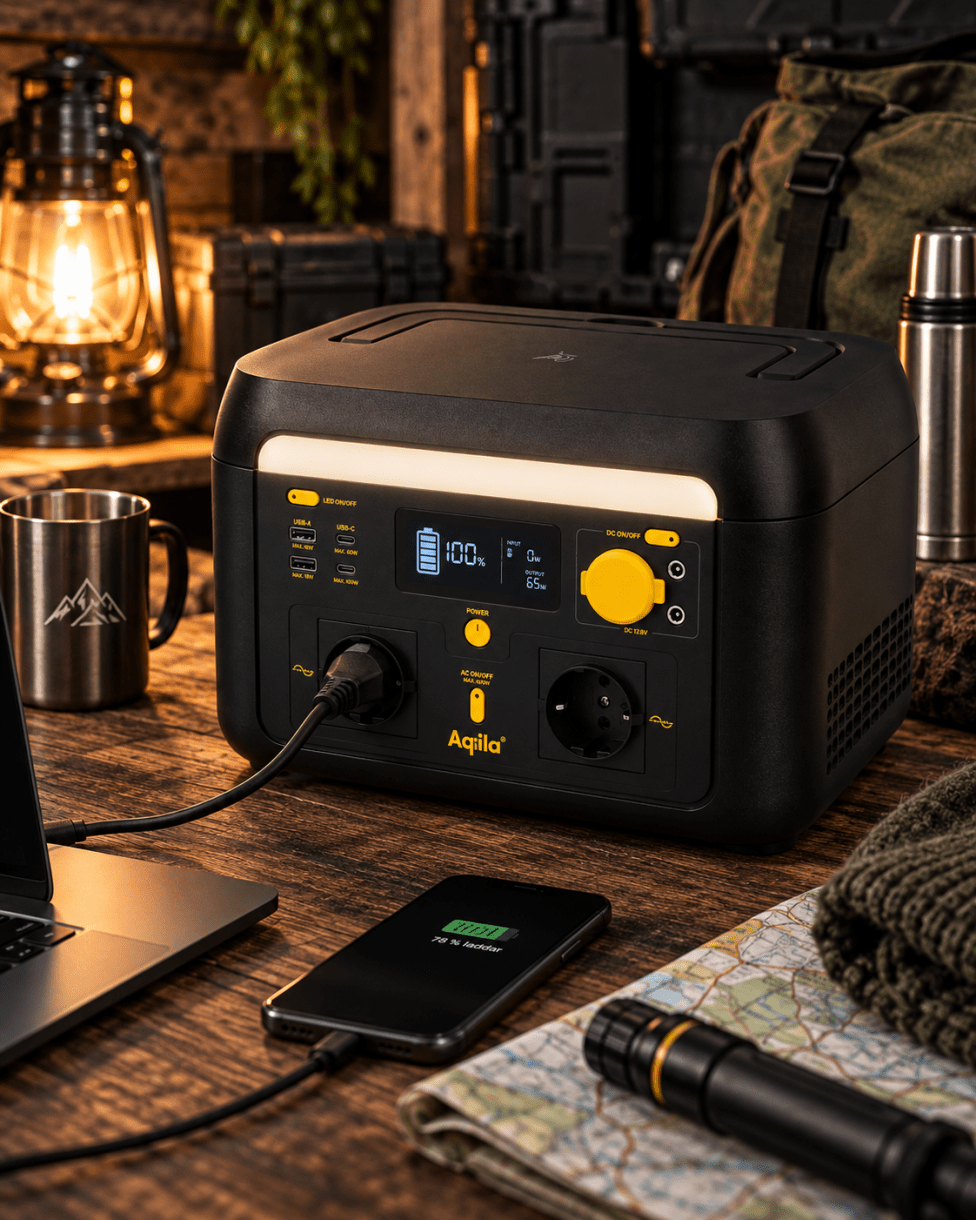
A small battery backup that can easily charge phones and lights may not be capable of running a heating system.
Think in multiple levels
Robust heating preparedness rarely relies on a single solution. Start with the simplest measures and add more according to your circumstances.
Retain heat
Warm clothing, blankets, sleeping bags and insulation work without electricity or fuel.
Create a warm zone
Limit the area that needs to be kept warm and reduce heat loss.
Add heat
If necessary, supplement with a safe alternative heat source, fuel or correctly sized backup power.
Heating preparedness for organisations
For businesses, municipalities and other organisations, heating preparedness needs to be planned on a larger scale.
Which premises need to remain usable during an extended outage? How many people need to stay there? What temperature needs to be maintained? How long must the solution operate, and how will fuel or energy be supplied?
For some organisations, it may be more realistic to prioritise a smaller number of heated rooms or assembly areas rather than trying to maintain a normal temperature throughout an entire building.
The solution therefore needs to be sized according to the premises, number of people, temperature requirements, power demand, operating time, ventilation and energy supply.
How would you stay warm for a week?
As with water and food, planning starts with your own circumstances.
If your normal heating stopped working this evening – how would you stay warm?
Consider which rooms you would use, what clothing, blankets and sleeping bags you have available, whether you have an alternative heat source and how long your fuel or backup power would last.
For an organisation: carry out the same exercise based on the premises and people that need to remain operational.
You do not need to be able to heat the entire building as usual. The goal is to keep the people inside warm.
Build your heating preparedness
Start with passive measures and supplement them with heating or backup power based on the actual circumstances of your home or organisation.
Good heating preparedness is not about being able to heat everything as usual. It is about being able to keep people warm when the normal heating system is not working.