Information & Communication – When You Need to Know What’s Happening
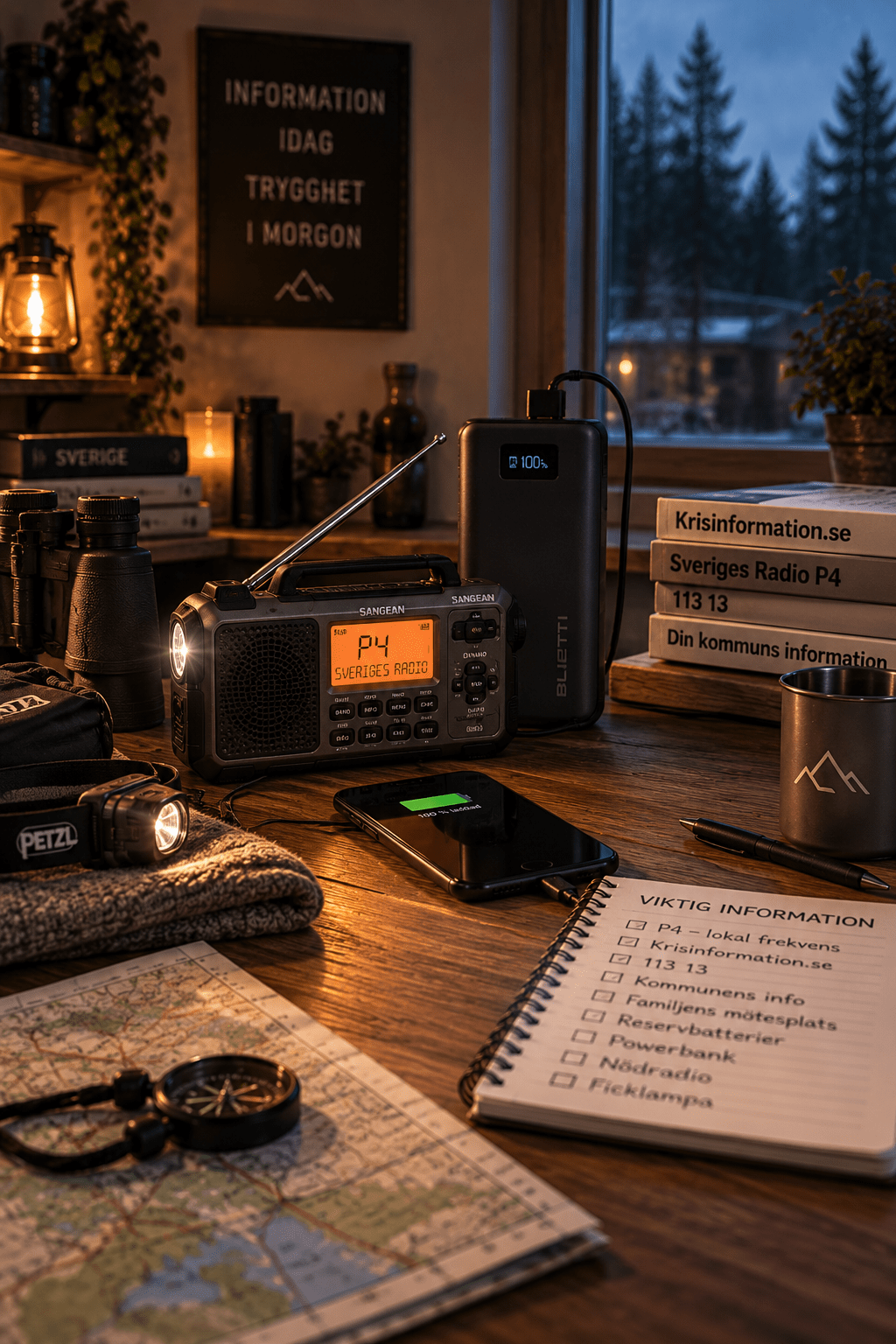
During a serious incident, access to accurate information is an important part of your preparedness.
What has happened? Which area is affected? Should you stay at home or leave the area? Is the water safe to drink? Where can you get help and what instructions are the authorities providing?
In everyday life, we receive almost all our information through mobile phones and the internet. But during an extended power outage or a major disruption to society, internet access, mobile networks and our ability to charge devices may all be affected.
Your preparedness therefore needs to include ways to receive important information even when the usual communication channels are unavailable.
Build your information preparedness around three things:
✦ Be able to receive important information
✦ Be able to keep essential equipment running
✦ Have a plan for how you will communicate
Sveriges Radio P4 is your emergency information channel
During a crisis or major disruption to society, Sveriges Radio P4 plays a particularly important role. Local P4 stations serve as emergency information channels and are used to communicate important information to the public.
This may include information about what has happened, which areas are affected, where water can be collected, evacuations or other instructions from the responsible authorities.
It is therefore a good idea to know in advance which P4 station and frequency applies where you live or where your organisation is located.
When internet access and mobile networks are not working as usual, you still need to be able to receive information.
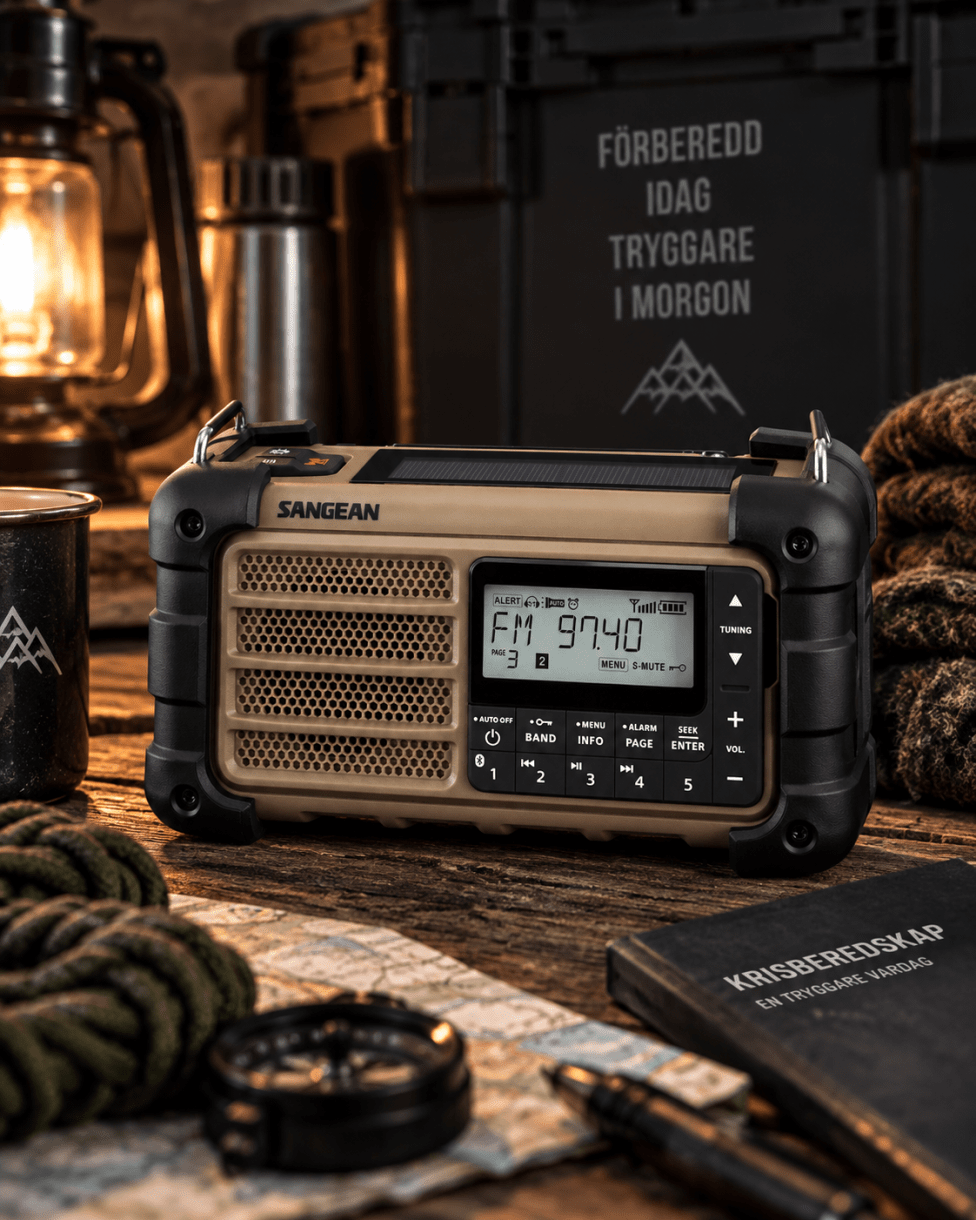
Have a radio that works without mains power
A radio is a simple and reliable way to receive information when other communication channels are unavailable. But naturally, it needs to work during a power outage.
Battery-powered radio
A battery-powered radio is simple and reliable as long as you have spare batteries. The advantage is that its power supply is easy to plan for and batteries can be stored separately.
Hand-crank radio
A hand-crank radio has a built-in battery that can be charged manually. Many models can also be charged via USB or solar power and combine the radio with features such as a torch and power bank.
Additional features can be useful, but from an information preparedness perspective, the ability to receive radio broadcasts is what matters most.
VMA – Important Public Announcement
In the event of serious accidents and other incidents, authorities may issue a Viktigt meddelande till allmänheten (VMA), Important Public Announcement.
A VMA contains information about what has happened and instructions on how people in the affected area should act.
Radio is therefore not just a way to follow the news. It can be a direct channel for information that affects what you need to do.
Use multiple information channels
As long as internet access and mobile networks are functioning, there are several important sources of information. The key is not to become dependent on a single channel.
Krisinformation.se
Provides verified information from Swedish authorities and other responsible organisations during major incidents.
Your municipality & local organisations
Can provide information about water supplies, emergency support centres, local disruptions and other conditions in your area.
113 13
Sweden's national information number for serious accidents and crises. In the event of an immediate threat to life, property or the environment, call 112.
Backup power for your phone and other equipment
Even if the mobile network is working, your phone is not particularly useful once its battery is dead.
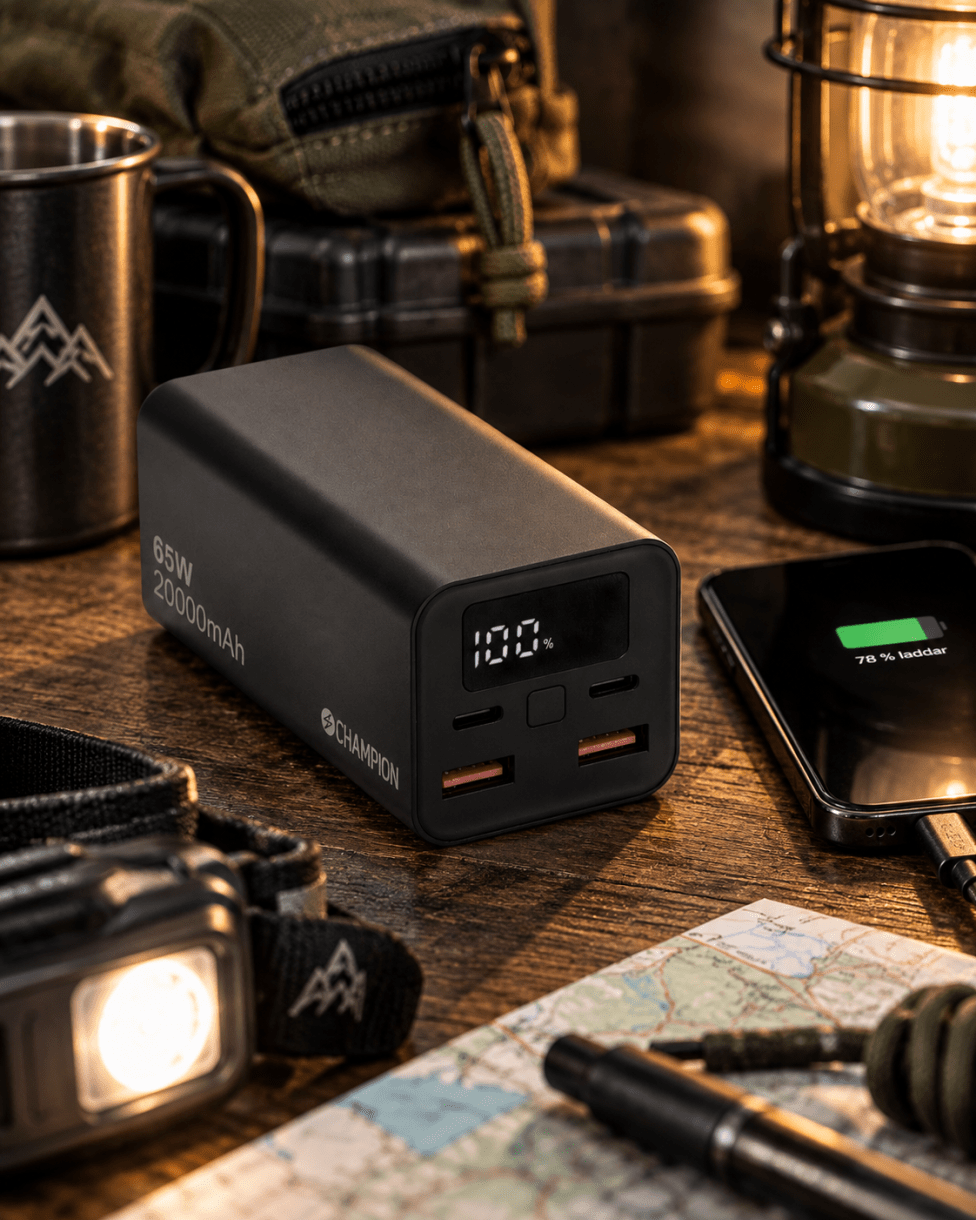
One or more charged power banks can therefore be a simple part of your preparedness. For longer outages, a larger battery backup or another source of backup power can provide additional resilience.
But backup power does not replace a radio.
A widespread power outage can affect the infrastructure your phone depends on, regardless of how much battery power you have left. It is therefore wise to have both a way to charge essential electronics and an alternative way to receive information.
Backup power keeps your equipment running. It does not guarantee that the network it communicates through will still be functioning.
Decide how you will stay in contact
Communication is also about being able to find and reach each other.
If something happens in the middle of the day, family members may be at work, at school or elsewhere. If phone services are disrupted at the same time, a simple plan can be valuable.
Decide, for example, where you will meet if you cannot reach each other and who you will contact if someone does not return home as planned.
For businesses and public-sector organisations, the same principle forms part of continuity planning. Who needs to be able to reach whom? What communication channels are available if normal systems are down? Which people, functions and phone numbers need to remain accessible offline?
If phone and internet services disappeared right now – how would you get information and how would you contact each other?
Be critical of sources when information is uncertain
During major incidents, information spreads quickly. So do false information, old images, rumours and deliberately misleading claims.
Therefore, try to distinguish between verified information from authorities, journalistic reporting and unverified information on social media.
Check who is behind the information, when it was published and whether the claims are confirmed by other reliable sources.
During a crisis, it is more important for information to be accurate than for you to receive it first.
Build your information preparedness
Effective information preparedness does not need to be complicated. Start with three backup measures.
Receive
Have a radio that works without mains power and know which local P4 station to listen to.
Keep running
Have spare batteries, power banks or other backup power for essential electronics. Keep your devices charged.
Keep your plan offline
Write down important phone numbers, contact details, meeting points and other information that would otherwise only be stored on your phone or in the cloud.
Equipment for information and communication
The right equipment provides alternative ways to receive information and keep essential electronics running when normal infrastructure is disrupted.
When something happens, you do not just need to be prepared – you need to know what is happening and how to act.