Evacuation Bag – When You Need to Leave Quickly
Home preparedness is primarily about being able to manage where you are when society is not functioning as usual. But there are situations where it may instead be necessary to leave your home, workplace, or an area.
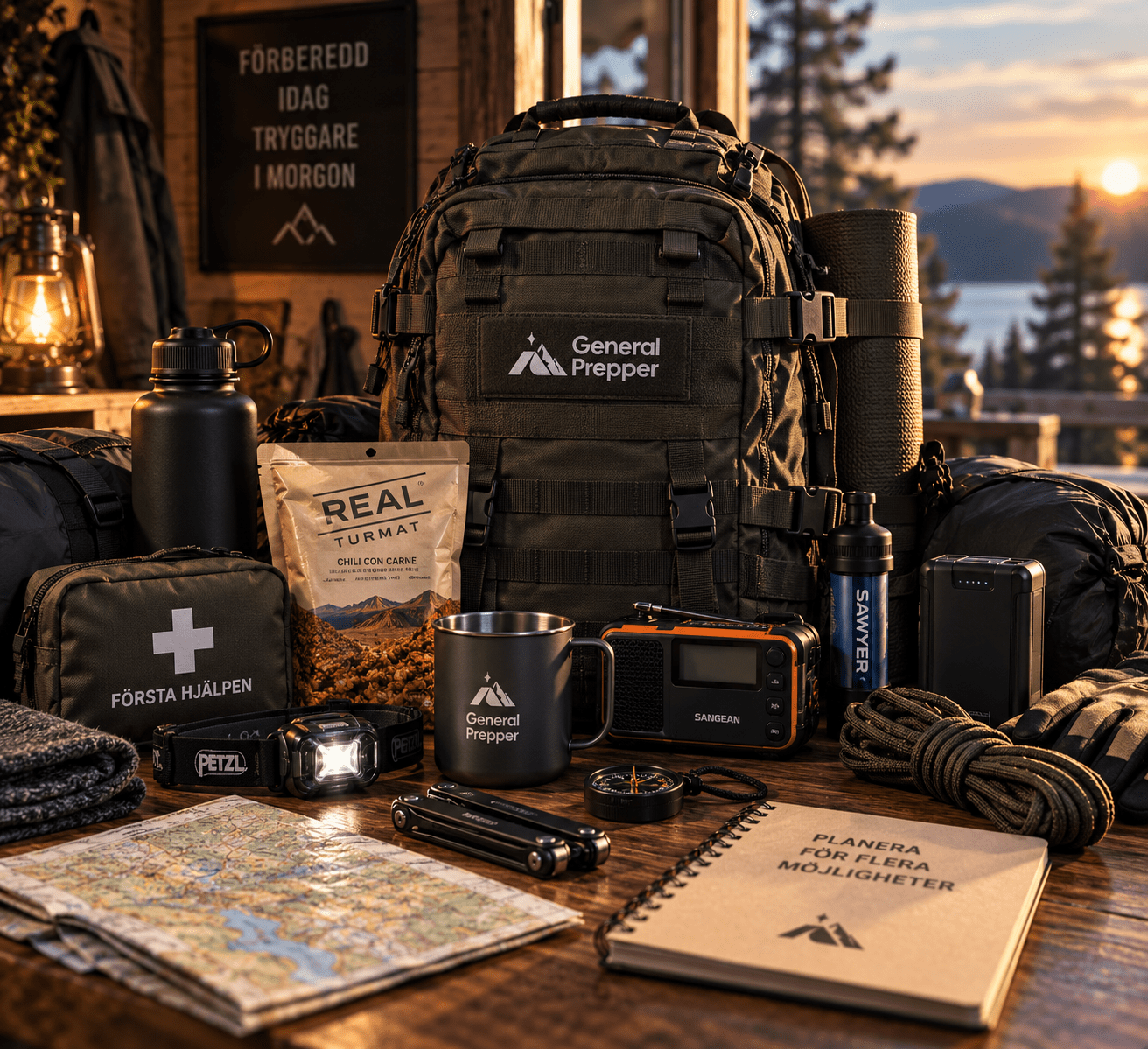
A fire, flood, major accident, or other serious event may require an area to be evacuated. A pre-packed bag allows you to quickly take the essentials with you without first having to think about what to pack.
MSB describes evacuation as a measure to move people away from a risk area in order to protect life and health.
A good evacuation bag should help you to:
✦ Leave quickly
✦ Meet your basic needs while on the move
✦ Reach a place where you can continue your preparedness
Go Bag, Bug Out Bag, or evacuation bag?
The terms are used in slightly different ways, and there is no need to make the definitions more complicated than necessary. The main difference is about purpose and endurance.
Go Bag
A smaller preparedness bag that helps you get from where you are to a safe place – for example, from work to home.
Bug Out Bag
A more comprehensive bag for situations where you need to leave a location and be able to manage more independently for a longer period of time.
Evacuation Bag
The clearest term: a pre-packed bag containing what you need to take with you if you have to quickly leave your home or another location.
The principle is the same: the essentials should already be packed when you need to leave.
Start with where you are going – not with what to pack
Just like with an emergency kit, it is easy to start with the equipment. Start with the situation instead.
Should the bag help you walk ten kilometres home from work? Should it be kept in the car? Or should your family be able to leave home at short notice and manage the first period in another location?
These scenarios place very different demands on the contents.
Also consider the season, distance, transport options, and the people who will be using the bag.
What should the bag help you do – and how long do you need to manage with what you can carry?
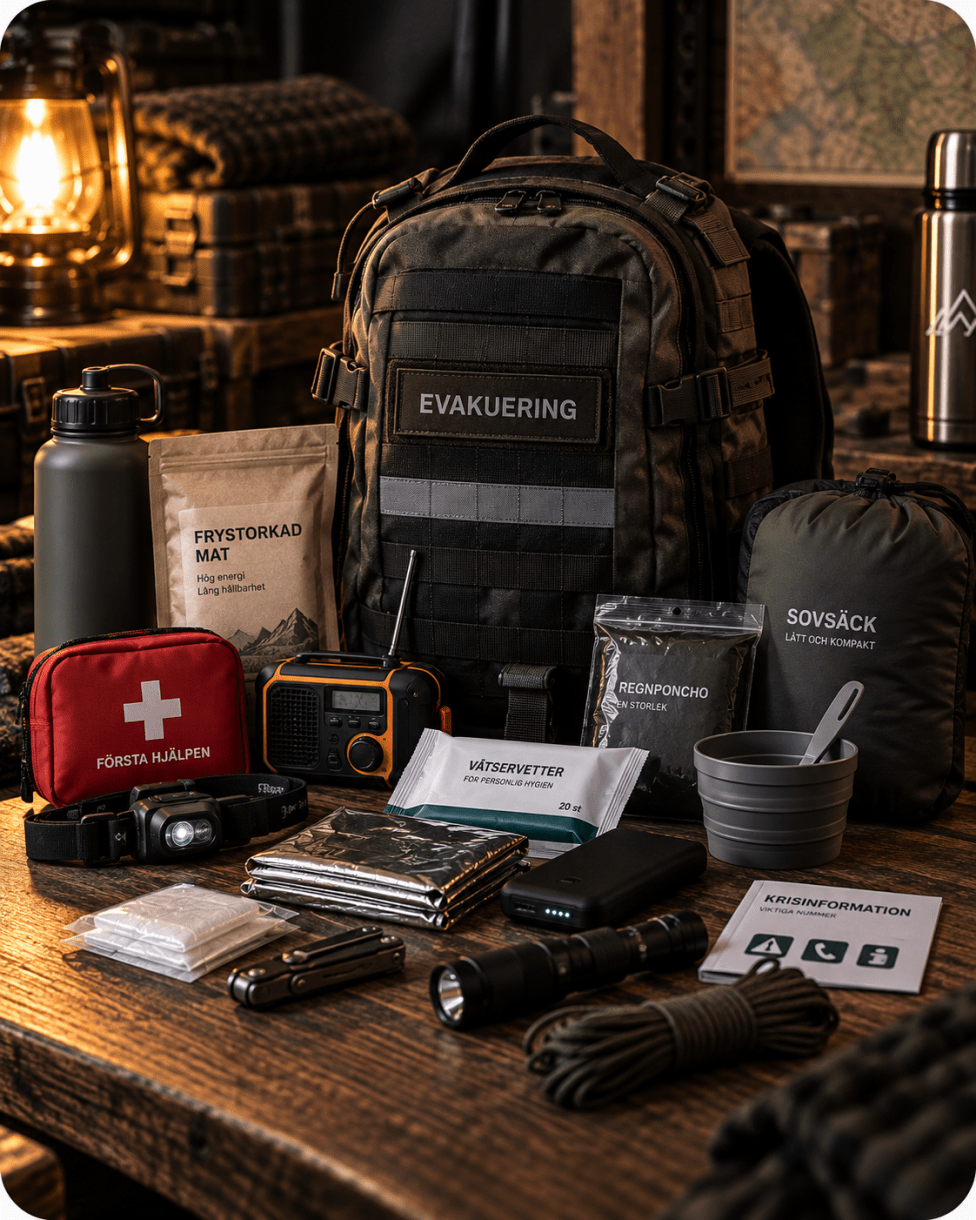
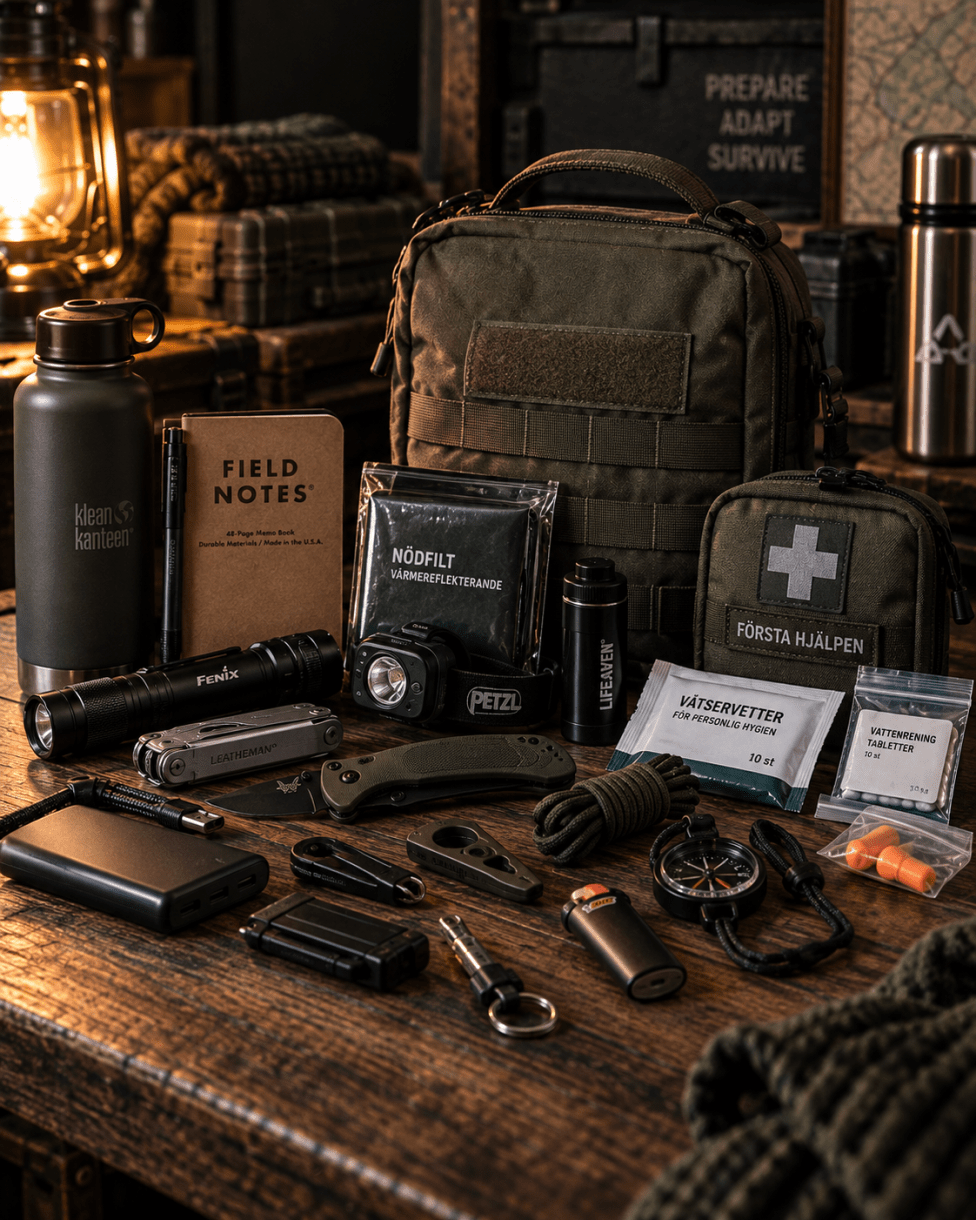
What should an evacuation bag contain?
The contents need to be adapted to the user and the task, but some basic needs are common to most evacuation bags.
Water
A small amount of drinking water provides an immediate reserve. Add a bottle or container that can be refilled and, where relevant, a compact water filter or other water purification solution.
Remember that water weighs approximately one kilogram per litre.
Food
Choose compact food with plenty of energy in relation to its weight and volume. Food that can be eaten directly is particularly practical when time, water, or cooking options are limited.
Read about food preparedness →
Warmth & weather protection
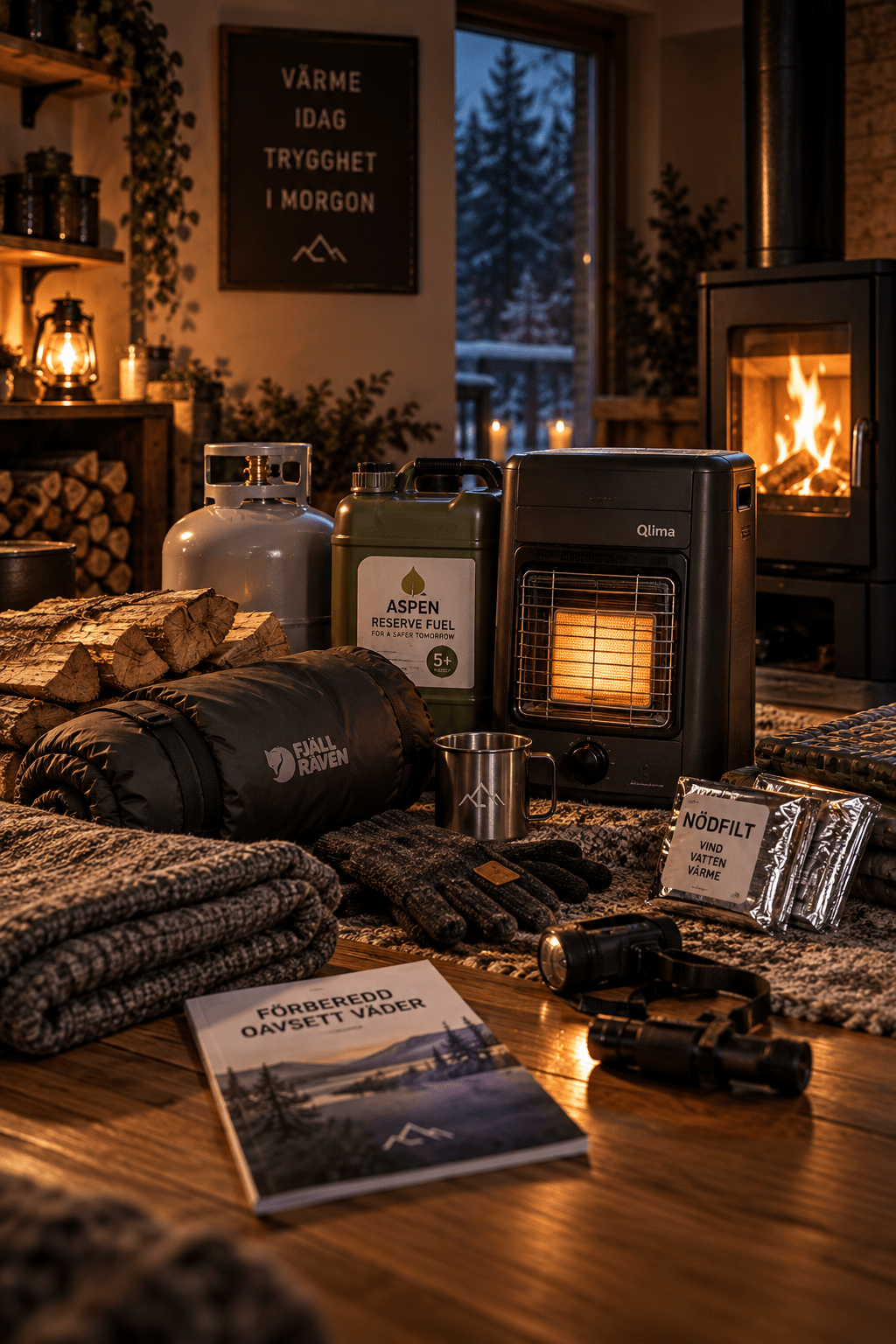
A rain poncho, emergency blanket or survival bag, gloves, hat, and a dry layer of clothing take up relatively little space. For longer-term endurance, a sleeping bag and sleeping mat may be relevant.
Read about warmth preparedness →
Information, light & power
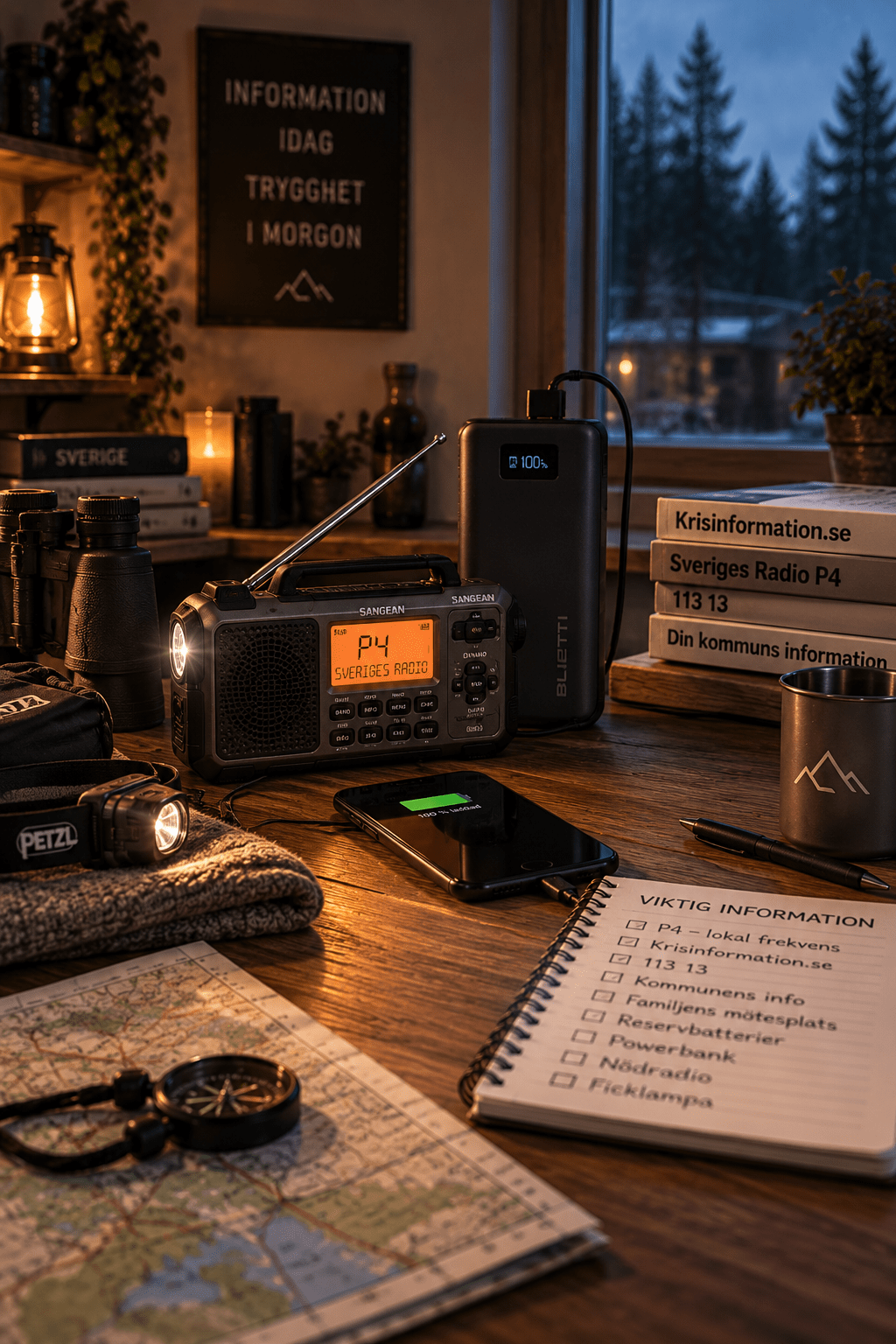
A headlamp or flashlight, power bank, and compact radio allow you to see, keep essential electronics running, and receive information when infrastructure is disrupted.
Read about information & communication →
First aid & personal items
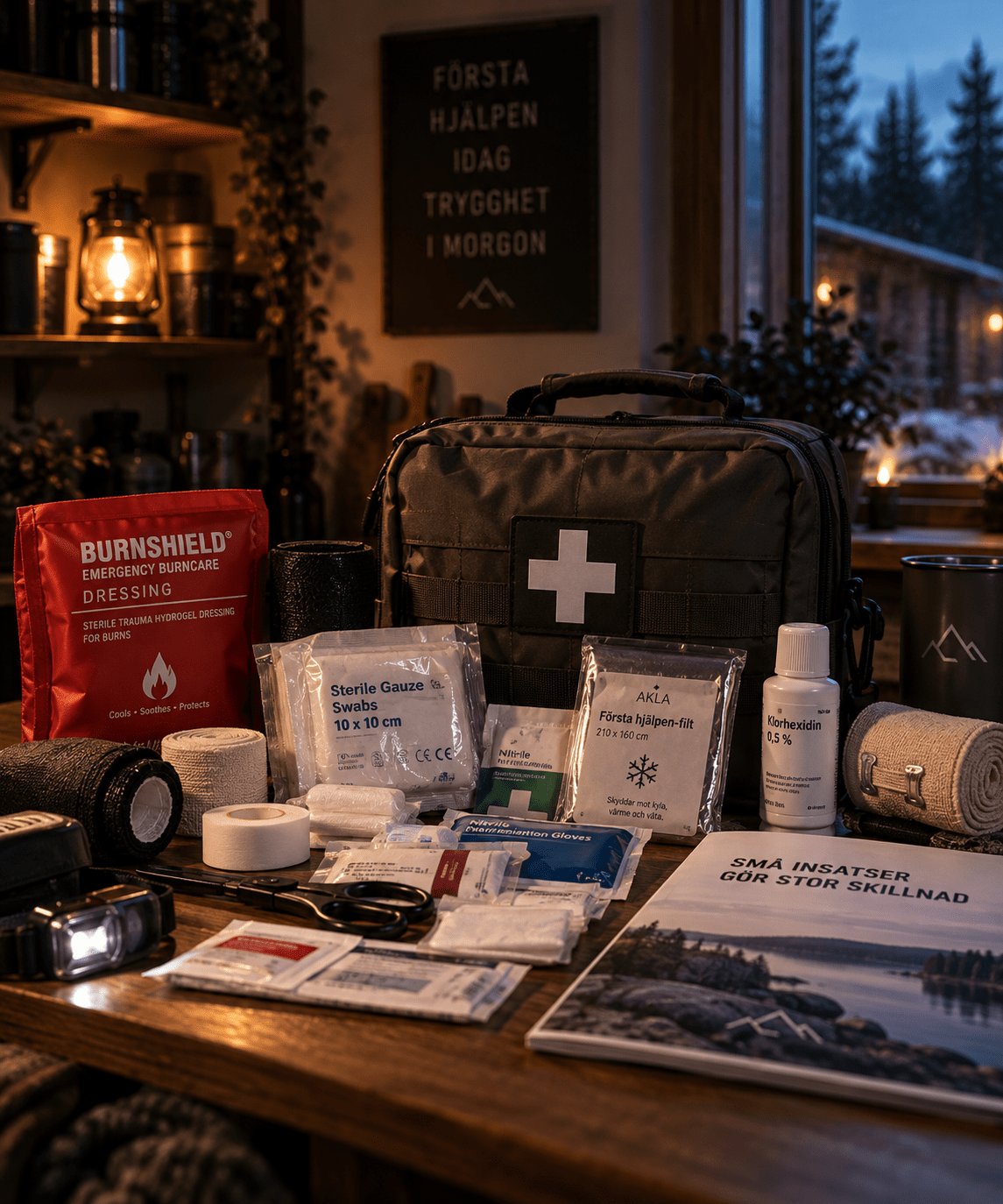
A compact first aid kit should be easily accessible. Add medication, glasses, hygiene products, and other personal aids.
Read about first aid →
Documents & payment
Keep important contact details and relevant documents accessible even without a phone or internet connection. Cash in small denominations can be useful if electronic payments are unavailable.
Weight matters
A common mistake is trying to prepare for every possible situation.
The result can easily be a backpack containing a great deal of equipment – but one that is difficult to carry when you actually need it.
Prioritise equipment that meets basic needs and adjust the amount according to how far the bag may realistically need to be carried.
A lighter bag with the right equipment is better than a complete bag that you cannot carry.
The same bag does not suit every situation
On foot
Weight, fit, and volume become crucial. Prioritise items that are difficult to replace along the way.
In the car
Weight and volume are less restrictive. This allows you to add more water, food, warmth equipment, and other supplies.
By season
A bag for January in northern Sweden needs very different additional equipment than a bag for a summer day.
Build the bag in modules
A good solution is to keep a basic set of equipment in the bag at all times and then add to it according to the situation, season, and mode of transport.
A winter kit can include additional warmth equipment. A longer journey may require more food and water. If the bag is being transported by car, larger and heavier equipment can be included.
This way, you do not need to build an entirely new bag for every situation.
Basic module
Water, power, light, information, first aid, and important personal items.
Situation module
Equipment adapted to where you are going, how far you need to travel, and what you are expected to be able to do.
Seasonal module
Warmth, weather protection, and other equipment that is changed or supplemented according to the season.
Practise with the bag
A pre-packed backpack provides limited reassurance if you have never tested it.
Put on the bag and walk a longer distance. Check the weight and fit. Use the water filter. Test the headlamp. Make sure the power bank is charged and that you know where the first aid equipment is located.
Also consider the routes you normally use between home, work, school, and other places – and what alternatives are available if your usual route cannot be used.
Equipment you have tested is significantly more valuable than equipment you have simply packed.
Evacuation preparedness for organisations
For businesses, municipalities, and other organisations, evacuation preparedness looks different from that of an individual household.
The question is not only what one person needs to carry, but also which functions need to remain operational, what equipment needs to be brought along, and where staff or management functions need to be able to relocate.
Individual Go Bags can, for example, complement the organisation's shared equipment for management, communication, first aid, documentation, and endurance.
Just like at home, the solution needs to be based on the actual task – not on a generic packing list.
Pre-packed evacuation bag or build your own?
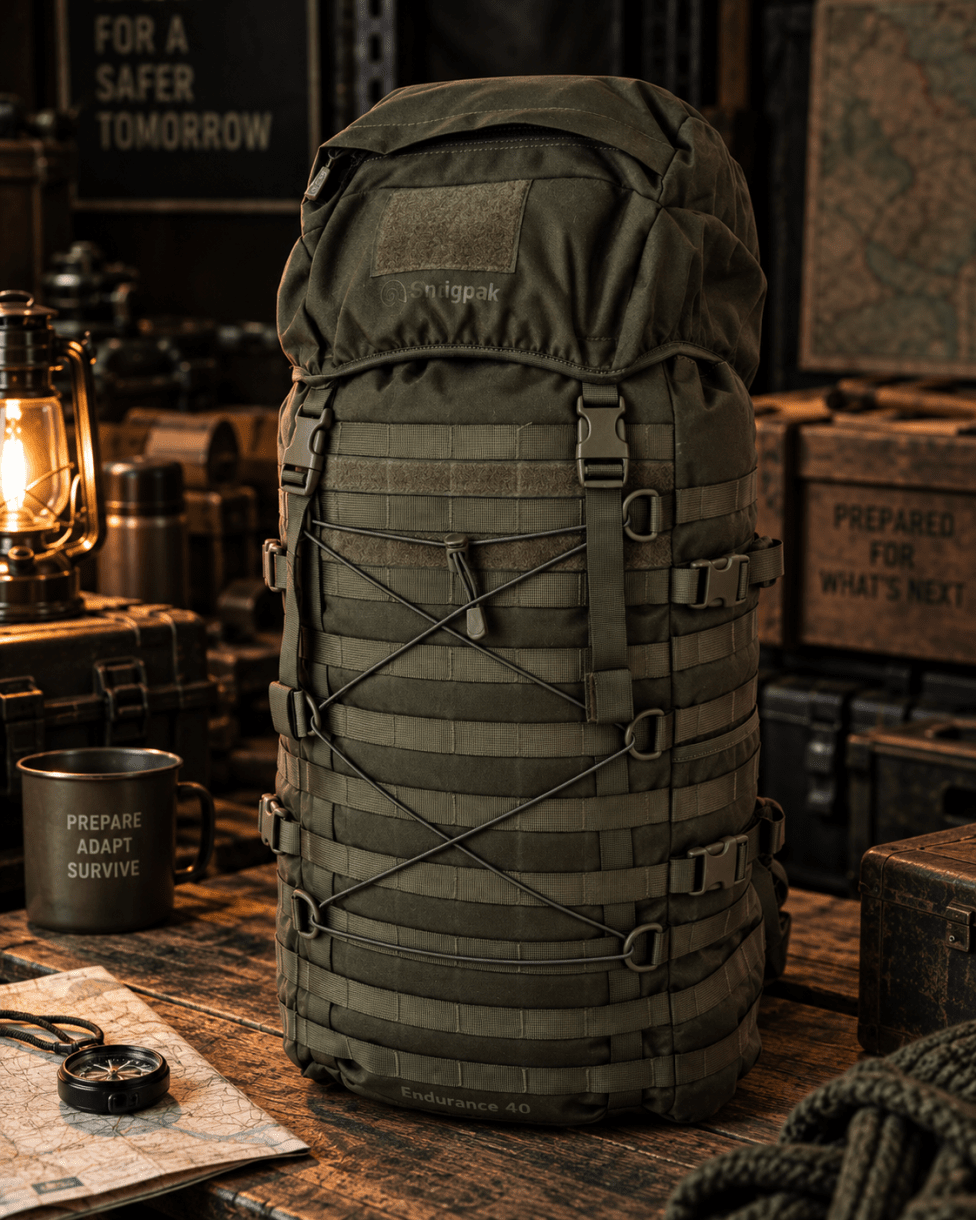
Pre-packed Go Bag / Bug Out Bag
Provides a well-considered foundation that can quickly be put into use and then supplemented according to the individual, season, and intended use.
Build your own
Gives you full control over contents, weight, and priorities and is particularly suitable if you already have plenty of outdoor and preparedness equipment.
Whichever option you choose, the bag should be adapted to the person carrying it and the task it needs to fulfil.
Build your evacuation preparedness
Whichever option you choose, the bag should be adapted to the person carrying it and the task it needs to fulfil.