First Aid – Knowledge and Equipment When Something Happens
Accidents and injuries happen even when society is functioning as normal. During a major disruption, however, it may take longer to get help, access may be limited and healthcare resources may need to be prioritised for the most urgent cases.
Being able to provide basic first aid is therefore an important part of emergency preparedness.
It is not about replacing professional healthcare. It is about being able to act during the crucial first few minutes, treat minor injuries and help an injured person while waiting for professional assistance.
Good first aid preparedness is built around three things:
✦ The right equipment
✦ Knowledge of how to use it
✦ Having the equipment available when it is needed
Knowledge is just as important as equipment
A well-equipped first aid kit is valuable – but only if you know what it contains and how to use the equipment.
Go through your kit before you need it. Check where the compresses, dressings, gloves and other equipment are located and read the instructions for products you are unfamiliar with.
Training in first aid and cardiopulmonary resuscitation, CPR, is a very good investment in your preparedness. In the event of cardiac arrest and other acute medical emergencies, immediate action can be crucial while waiting for an ambulance.
Equipment only helps when someone knows where it is and how to use it.
What should a first aid kit contain?
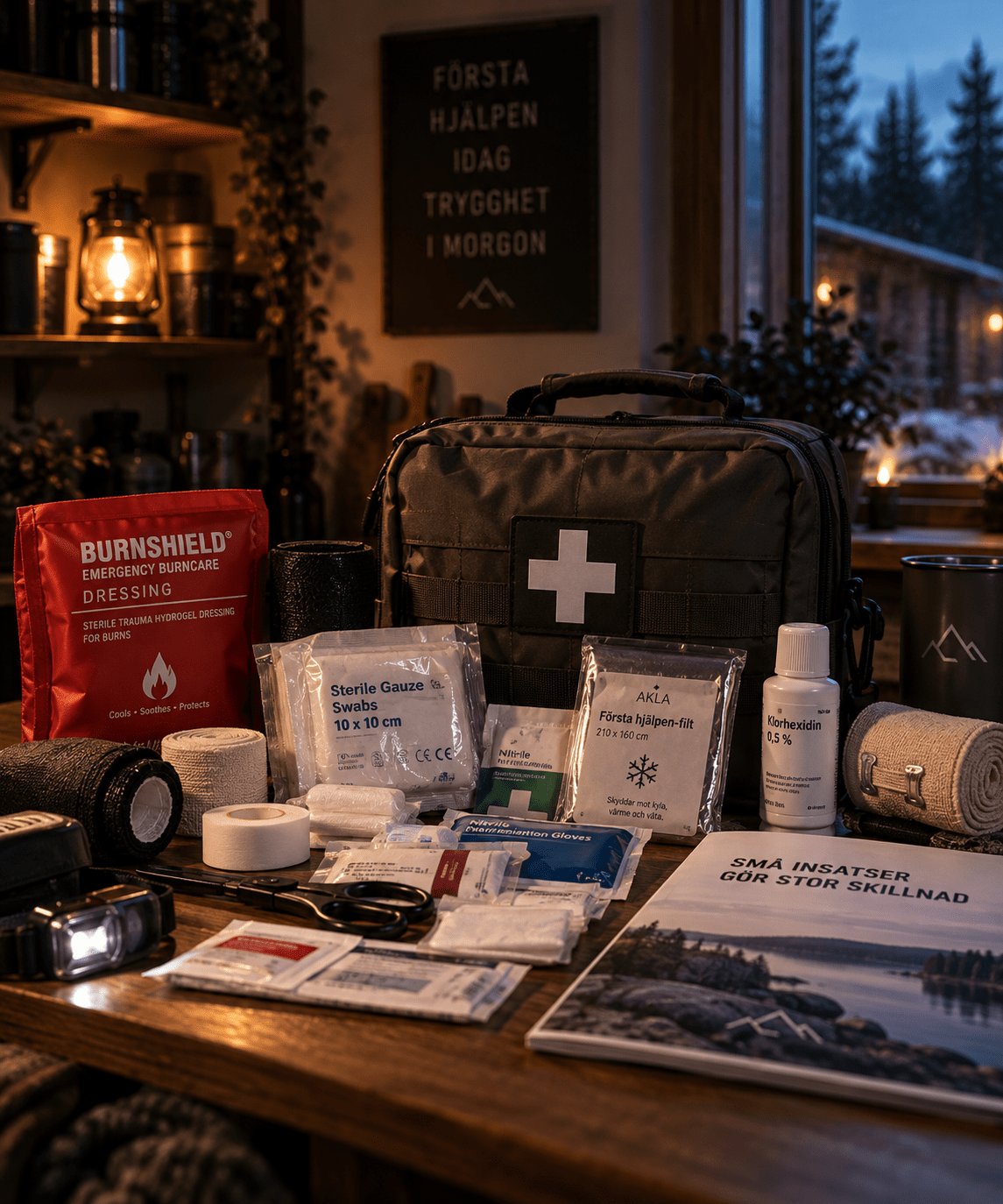
The exact contents depend on where the equipment will be used and the risks involved. A basic kit should enable you to deal with common minor injuries and provide first aid while waiting for professional medical care.
Wounds & bleeding
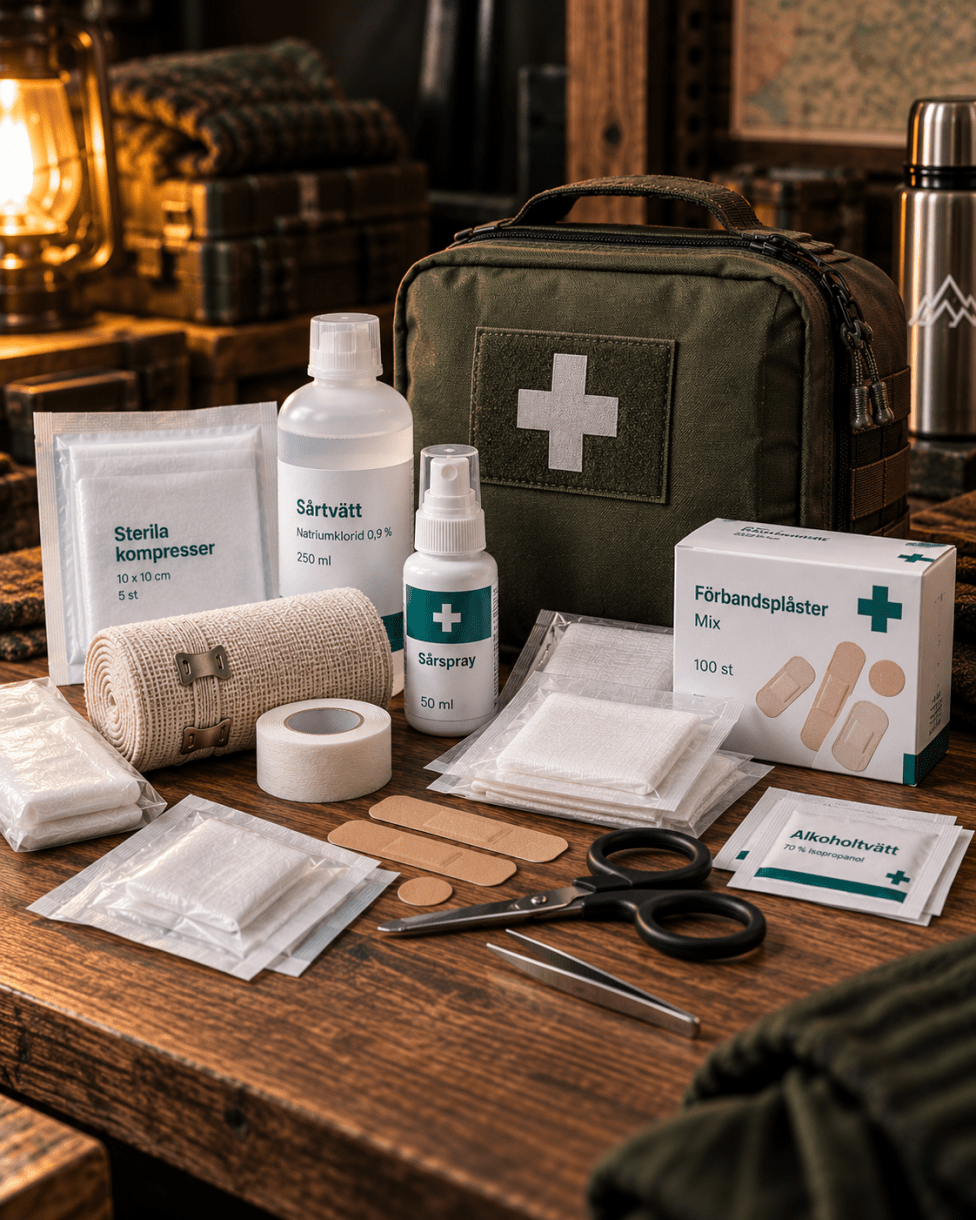
Plasters, sterile compresses, wound dressings, trauma dressings, elastic bandages and materials for basic bleeding control.
Burns & injuries
Burn dressings or burn gel, cold packs, slings and other equipment suited to the intended use.
Protection & accessories
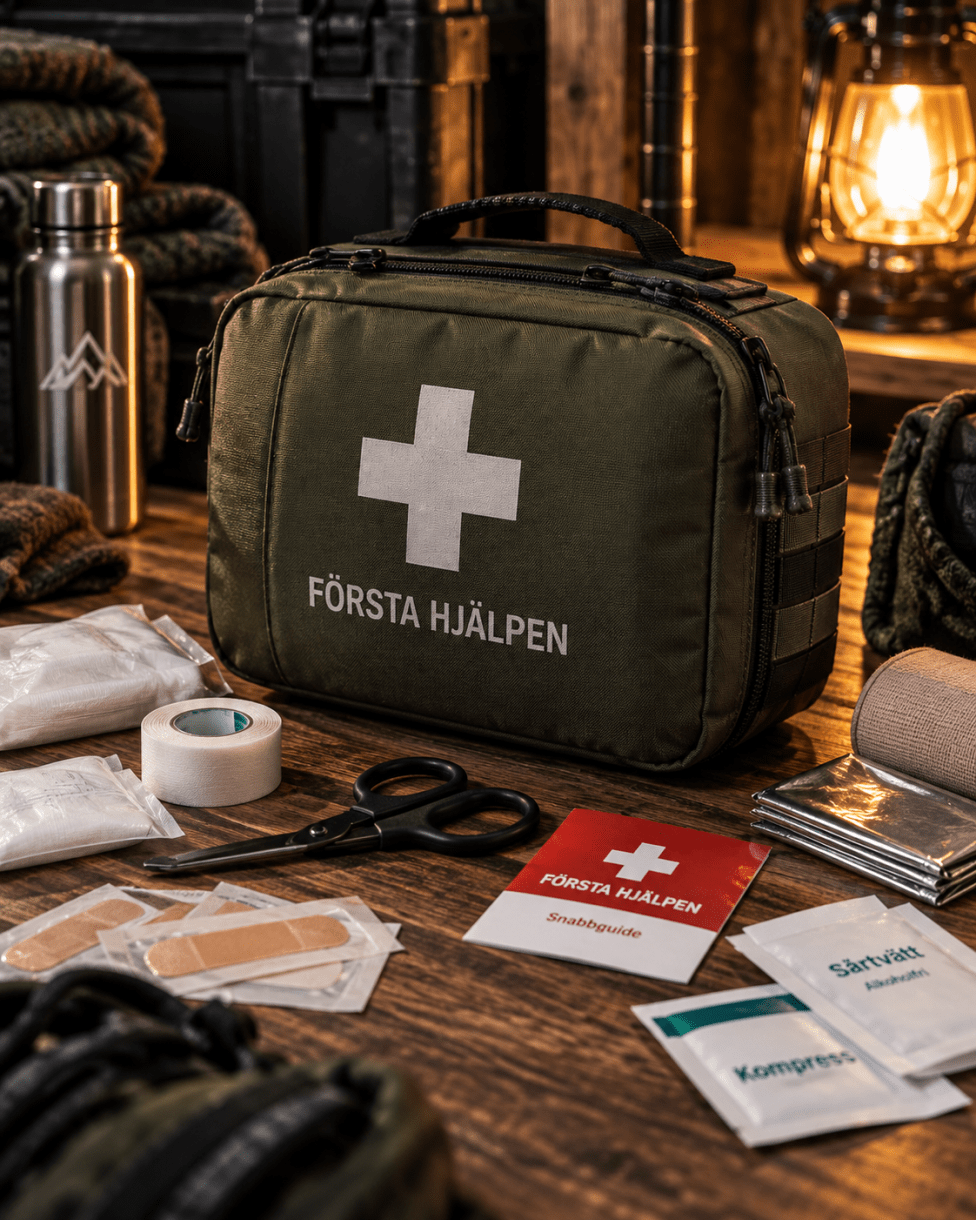
Disposable gloves, CPR face shields, scissors, tweezers, wound cleanser and an emergency blanket.
Needs vary. A smaller kit may be suitable for a car or backpack, while homes, workplaces and organisations may require larger and more comprehensive solutions.
Be prepared to control bleeding
Severe bleeding is one example of a situation where immediate action can be extremely important.
It is therefore useful to have both equipment for bleeding control and the knowledge of how to use it. Dressings and compresses can be used to apply direct pressure to a bleeding wound.
More advanced equipment, such as a tourniquet, requires the user to understand when and how it should be used. Training is far more important here than simply placing the equipment in a first aid kit.
In the event of severe or difficult-to-control bleeding: call 112 and follow the instructions from SOS Alarm.
Do not forget everyday injuries
Preparedness is not only about major accidents.
Cuts, grazes, minor burns, sprains and other everyday injuries are far more common. During an extended disruption, being able to treat minor injuries and having equipment for basic wound care becomes particularly valuable.
Check your equipment regularly as well. Used supplies need to be replenished and products with expiry dates should be checked.
Medication and personal needs
A standardised first aid kit can never contain everything that every individual may need.
If someone depends on prescription medication or medical equipment, this needs to be included in their personal preparedness planning. The same applies to glasses, contact lenses and other aids.
Follow the advice you have received from healthcare professionals and the rules that apply to your medication.
The first aid kit is shared. Some needs are personal and must be planned for separately.
Adapt the equipment to the situation
The same first aid kit is not necessarily right for every setting. Equipment should be adapted to the environment, the risks and how quickly professional help can normally arrive.
Home
A larger, well-organised kit can be kept in a designated location where everyone knows where to find it.
Vehicle & on the go
The equipment needs to be compact, durable and easily accessible when needed.
Workplace & organisation
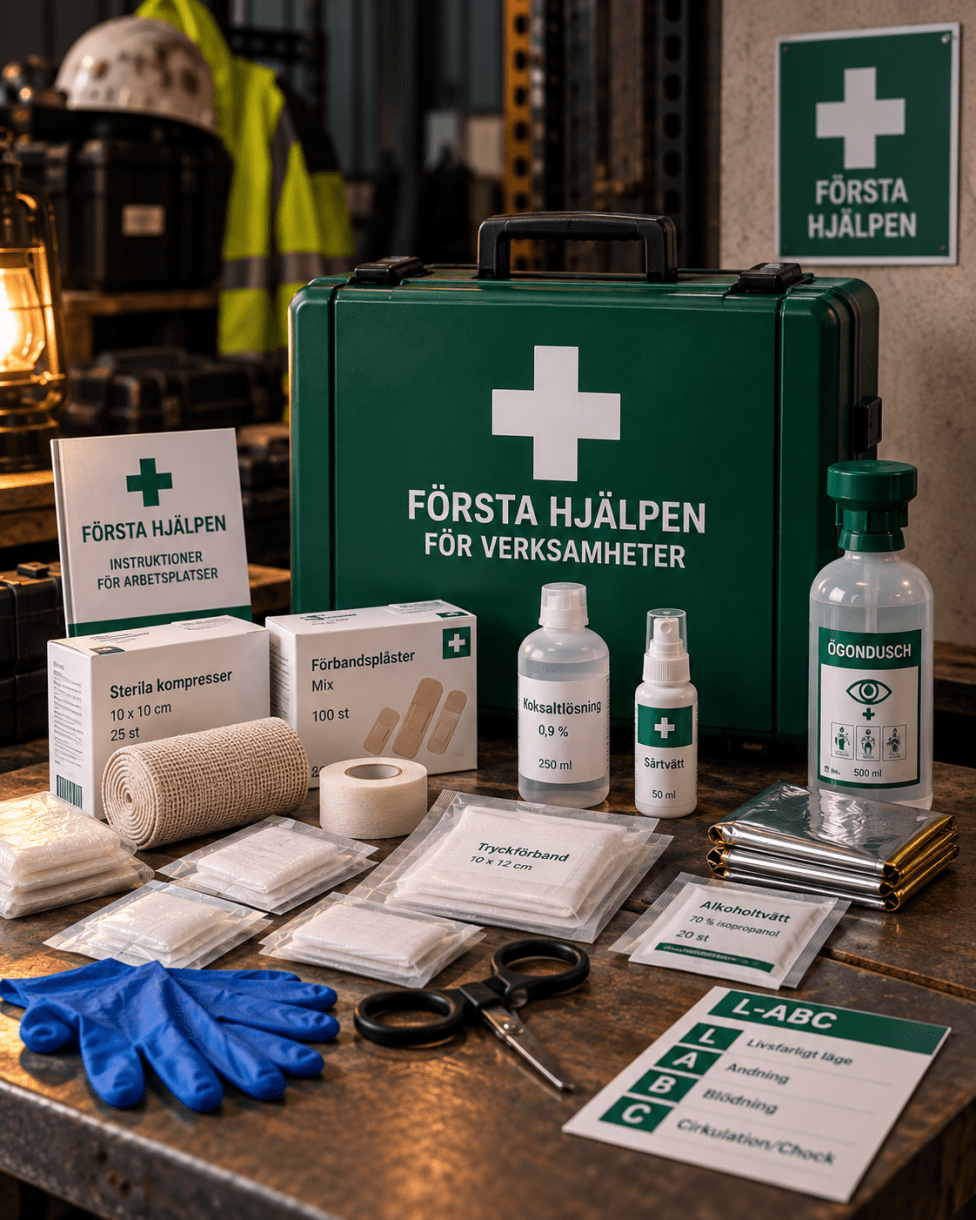
Size your first aid provision according to the number of people, the risks associated with the activity, the working environment and the distance from professional assistance. Also ensure that staff know about the equipment and can access it easily.
First aid as part of organisational preparedness
For businesses, municipalities and other organisations, simply purchasing first aid equipment is not enough.
Equipment needs to be placed where it can be reached quickly, sized appropriately for the organisation and checked regularly. Staff also need to know where it is and what procedures to follow when something happens.
Continuity planning should also consider how first aid capabilities would be affected if normal healthcare services, transport or communications were disrupted.
If professional help took significantly longer than usual to arrive – what first aid capabilities would you have available yourselves?
Make first aid an effective part of your preparedness
Equipment is only one part of your capability. It needs to be complete, accessible and usable.
Equip
Adapt your first aid equipment to the people, environment and risks.
Learn
Gain knowledge of basic first aid and CPR, and familiarise yourself with the equipment before you need it.
Check
Review the equipment regularly, replenish used supplies and check products with expiry dates.
Build your first aid preparedness
Needs range from a compact kit in a backpack to more comprehensive solutions for homes, vehicles, workplaces and organisations.
The best first aid equipment is the equipment you have available – and know how to use.