Food Preparedness – Food When Everyday Life Is Disrupted
Food is an important part of your preparedness. During an extended power outage, transport disruptions or other disruptions to society, shops, payment systems and deliveries may all be affected.
Authorities therefore recommend that households have enough food at home to manage for at least one week without support from society.
This does not mean you need a dedicated store filled with emergency food. Good food preparedness can largely consist of foods you already eat, supplemented with products that are easy to store and use when circumstances change.
Good food preparedness needs to address three things:
✦ Enough food and energy
✦ Food that works with limited access to electricity and water
✦ Sufficient shelf life for the level of preparedness you want to build
This provides the same visual consistency as the water page and the main page without making the pages identical.
Start with the food you already eat
The easiest way to build up your food preparedness is to buy a little more of the foods that are already part of your household's everyday diet.
Pasta, rice, grains, lentils, beans, crispbread, canned food, oil, soups, sauces and other foods that can be stored at room temperature can form the foundation of your food supplies. The Swedish Food Agency primarily recommends foods that are filling and provide energy, that your household enjoys and that require limited amounts of water and preparation.
Use the food regularly and replenish it when you shop. This way, your emergency food supply becomes part of your regular pantry rather than something you buy and then forget about.
Think about energy – not just the number of meals
During a crisis, everyday life may demand more of you than usual. It may be cold, you may need to walk longer distances or carry out tasks that are normally handled by functioning public services.
That is why simply counting portions is not enough.
The food needs to provide enough energy, protein, fat and carbohydrates. A food supply may look substantial but still contain too little energy to sustain your household over an extended period.
Variety also matters. Food preparedness needs to work in practice – and ideally, the food should be something you actually want to eat.
Do not just count portions. Calculate whether the food actually provides enough energy for the period and the number of people your preparedness plan needs to support.
Food with a very long shelf life
For those who want to supplement their regular food supplies, there are foods specifically developed for long-term storage.
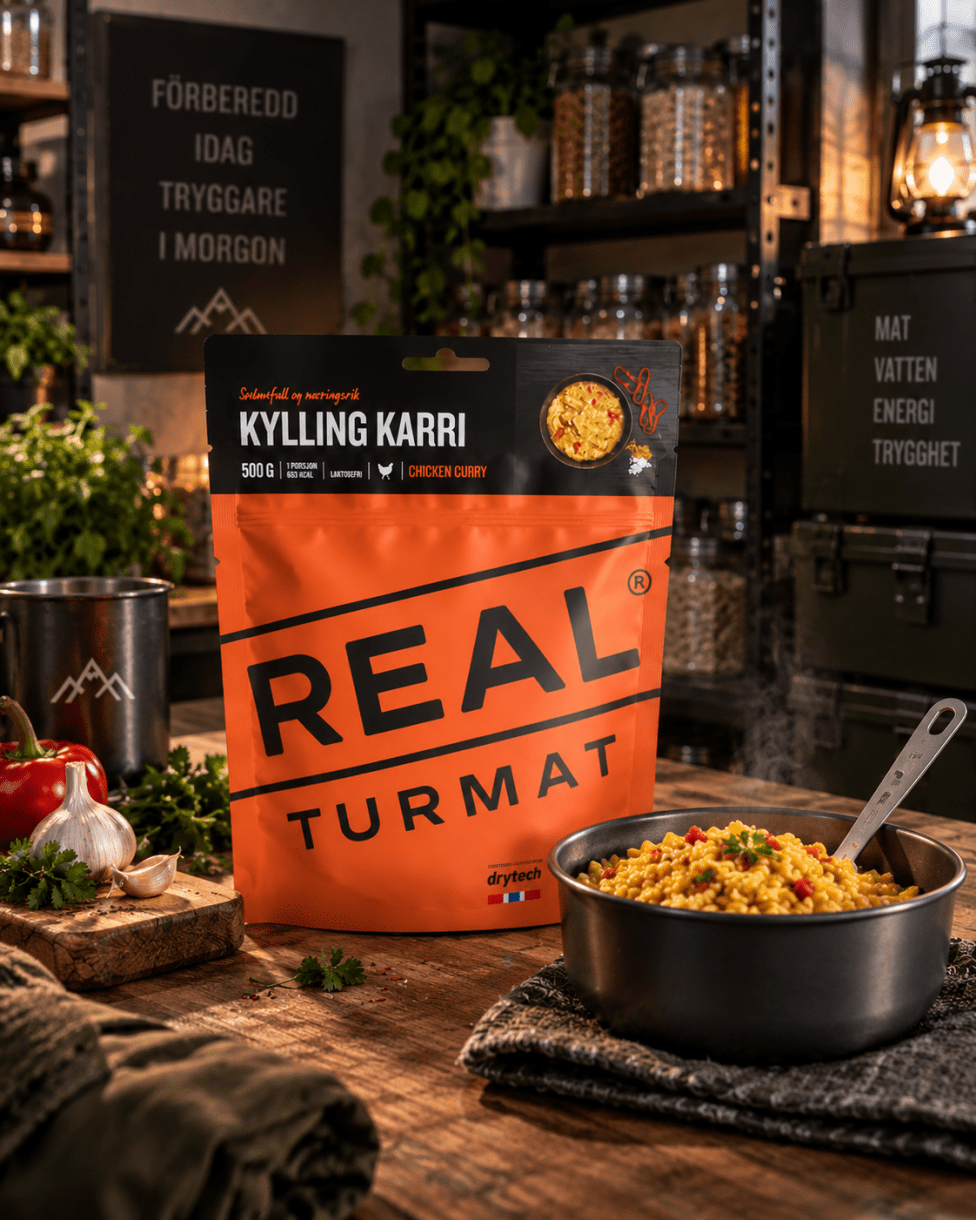
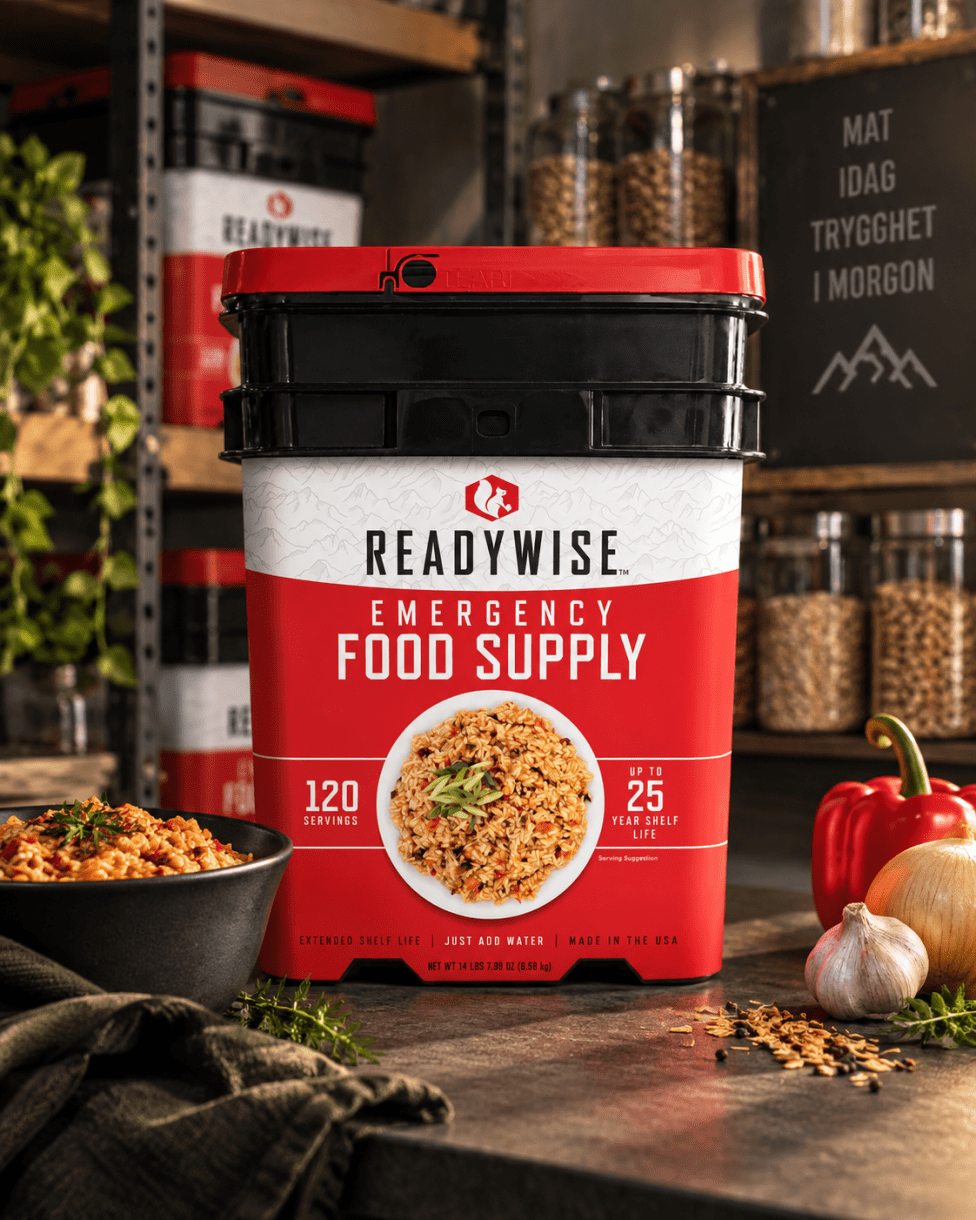
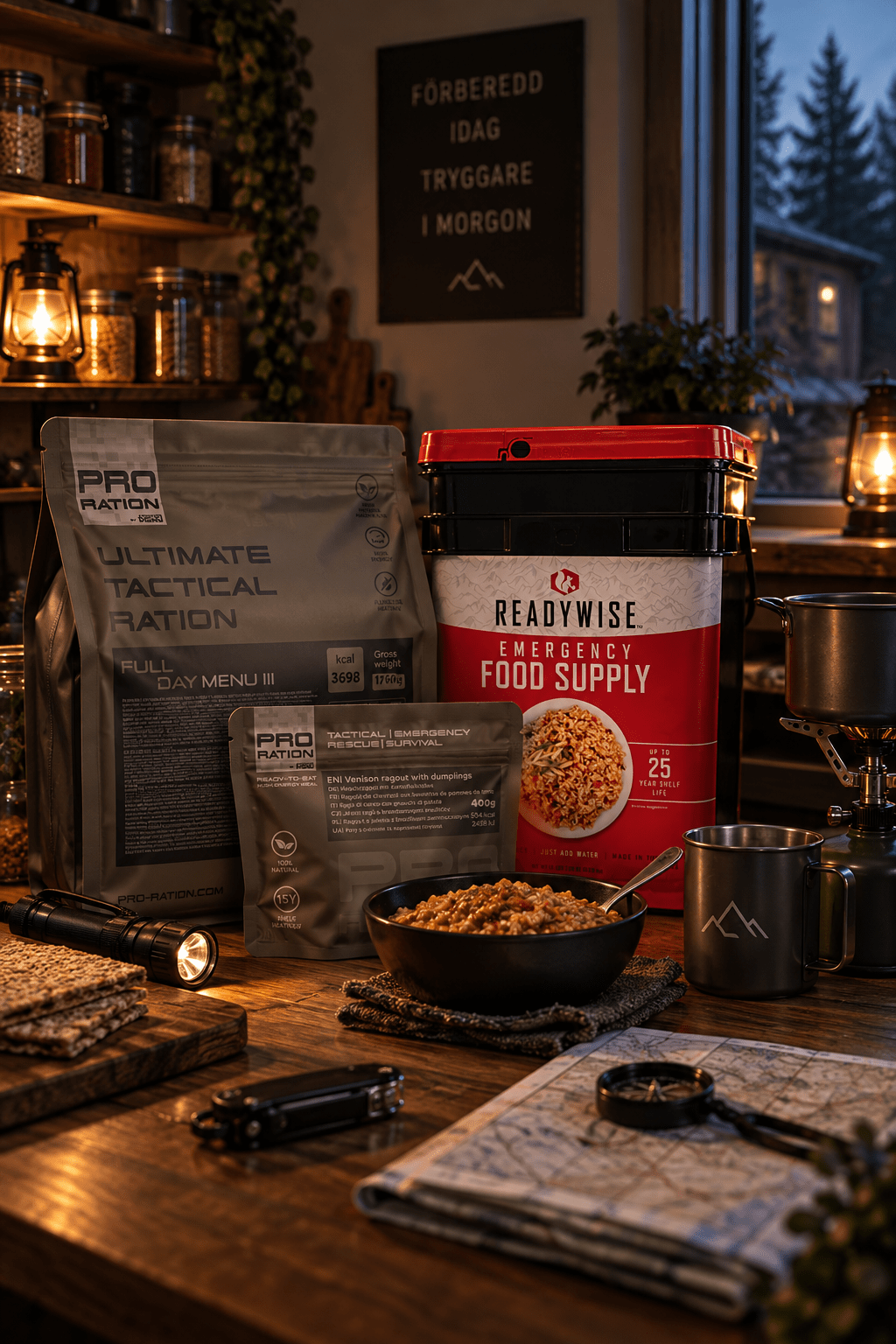
Freeze-dried food is one option because it combines low weight and compact storage with a long shelf life. Some products are designed to be stored for up to 25 years. There are complete meals, individual ingredients, bulk packs and ready-made food rations with different shelf lives.
The main advantage of a very long shelf life is that the food does not need to be rotated as frequently. This makes it suitable as a long-term foundation or reserve – both for home preparedness and for organisations where larger quantities of food need to remain available over time.
But it does not need to replace your regular pantry.
For most people, a combination of everyday food and long-shelf-life food is the most practical solution.
Different foods meet different needs
Shelf life is only one aspect of food preparedness. Weight, volume, energy content, water requirements and preparation requirements also affect which types of food are suitable.
Pantry staples
Food you already use and can easily rotate. Economical and practical, but shelf life varies and some foods require both water and cooking.
Ready-to-eat food & rations
Food that requires little or no preparation. Valuable when access to electricity, water, time or fuel is limited.
Freeze-dried & long-term food
Low weight, efficient storage and a very long shelf life. Usually requires water and sometimes heating for preparation.
Plan for cooking without electricity
Having food at home is not enough. You also need to consider how you will prepare it.
If your hob and oven are not working, a camping stove or other alternative cooking equipment can be valuable. Choose foods that are quick to prepare, as both fuel and water may be limited.
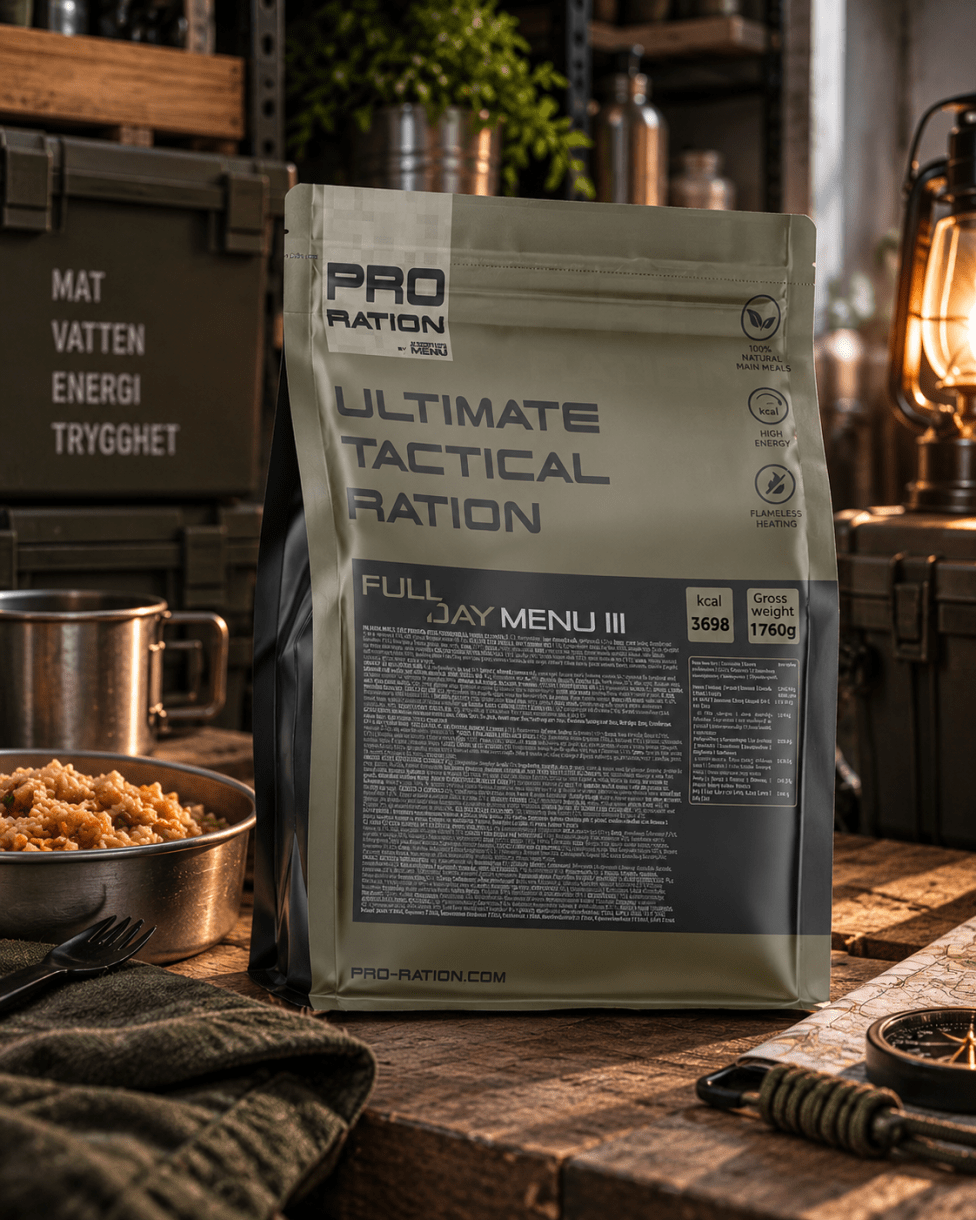
Some foods can also be eaten directly from the packaging. Having a few such options is practical during the initial period of a disruption.
If you use an alternative stove or other combustion-based equipment, it is important to follow the manufacturer's safety instructions. Equipment that is not designed for indoor use must not be used indoors.
Do not forget the water
Food and water preparedness go hand in hand.
Dry foods such as rice and pasta require both water and energy for cooking. Freeze-dried food requires water for rehydration. If water is limited, food that is normally easy to prepare may suddenly become less practical.
Therefore, plan your food supplies together with your water preparedness and include the water needed for cooking in your calculations.
Adapt your food supplies to the people who will eat them
There is no single food list that works for everyone.
Start with the number of people your preparedness plan needs to support and take children, allergies, special diets, medical needs and personal preferences into account. At home, pets also need to be included.
For workplaces, municipalities and other organisations, the same considerations quickly become part of the planning process: number of people, portion size, energy requirements, special diets, shelf life, storage space and preparation options.
If you were unable to shop or receive new deliveries for the coming week, would the food you currently have available be enough?
If the answer is no, you do not need to solve everything at once. Start with the biggest gaps and build from there.
Build your food preparedness step by step
Robust food preparedness can be built around three complementary components.
Everyday food
Food that is used and rotated regularly, providing a practical foundation for your preparedness.
Food requiring minimal preparation
Food that works when access to electricity, water, time or fuel is limited.
Food with a long shelf life
A long-term reserve that can be stored for many years and requires less frequent rotation.
The goal is not to store as much food as possible. The goal is to have enough of the right food when it is needed.
Find the right food for your preparedness
Your needs will vary depending on how long the food needs to be stored, how many people it needs to support and what access you have to water and cooking facilities.
That is why we have built our range to cover several types of food preparedness – from individual meals and practical everyday options to long-term food and larger-scale food supply solutions.