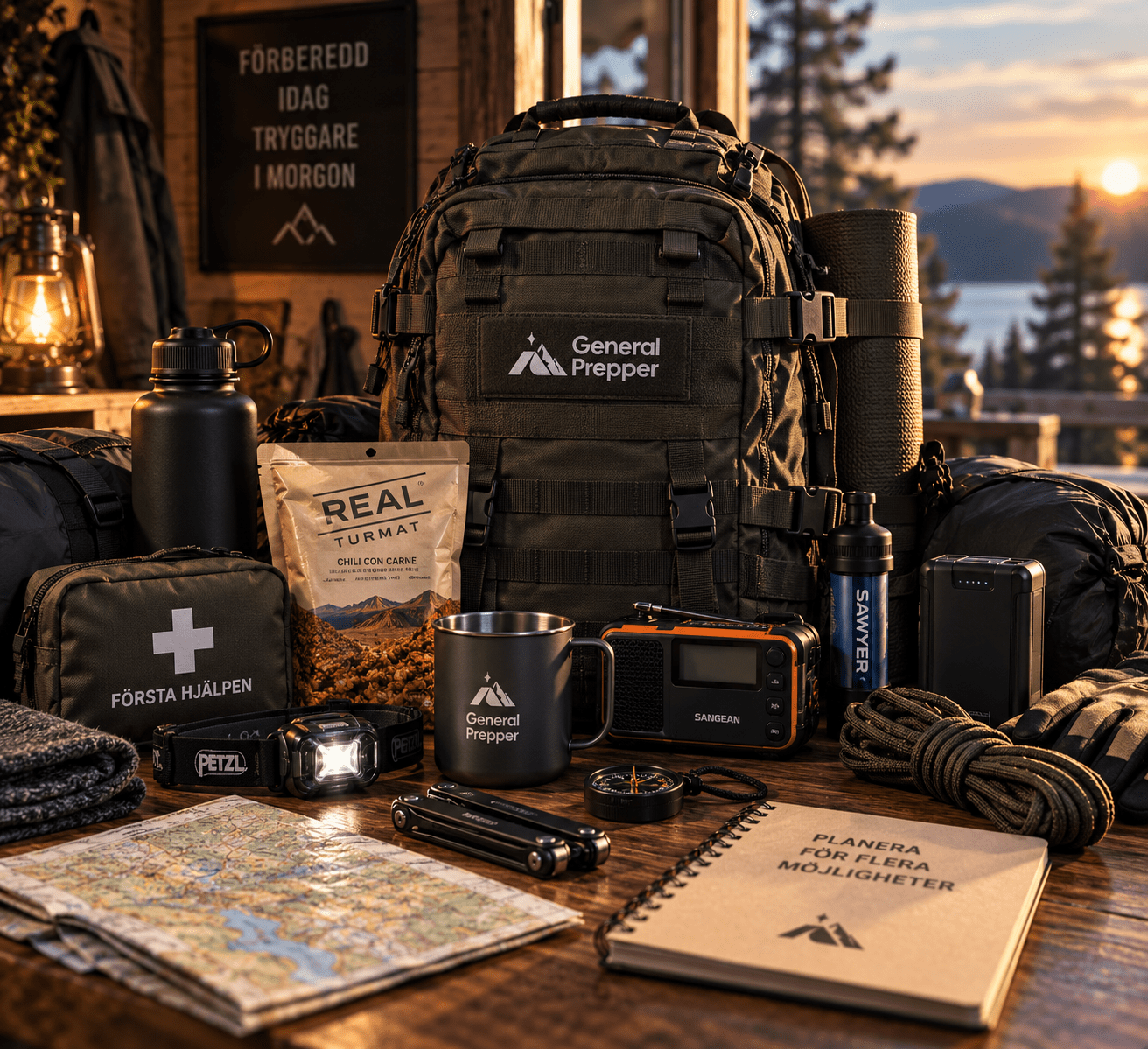
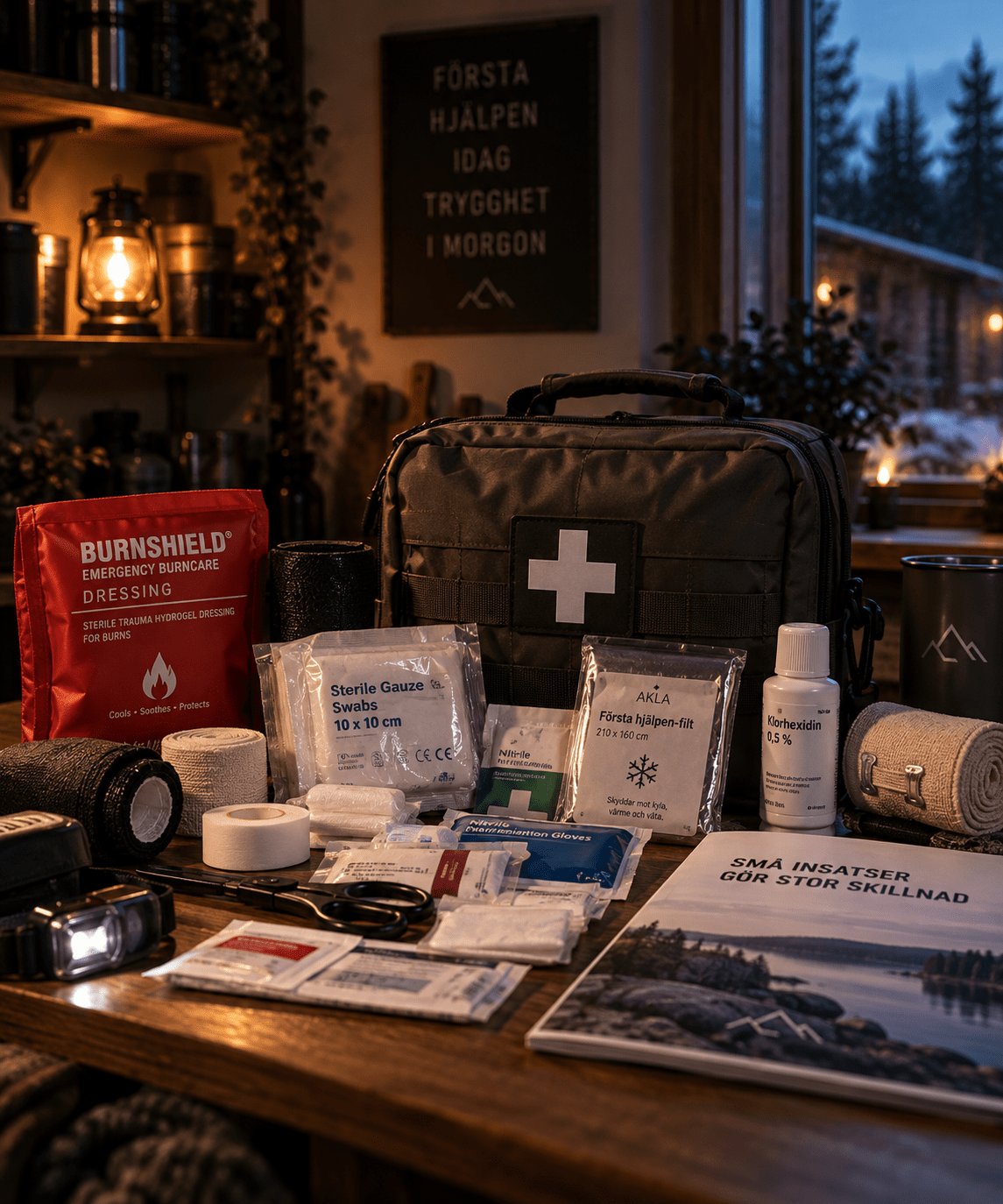
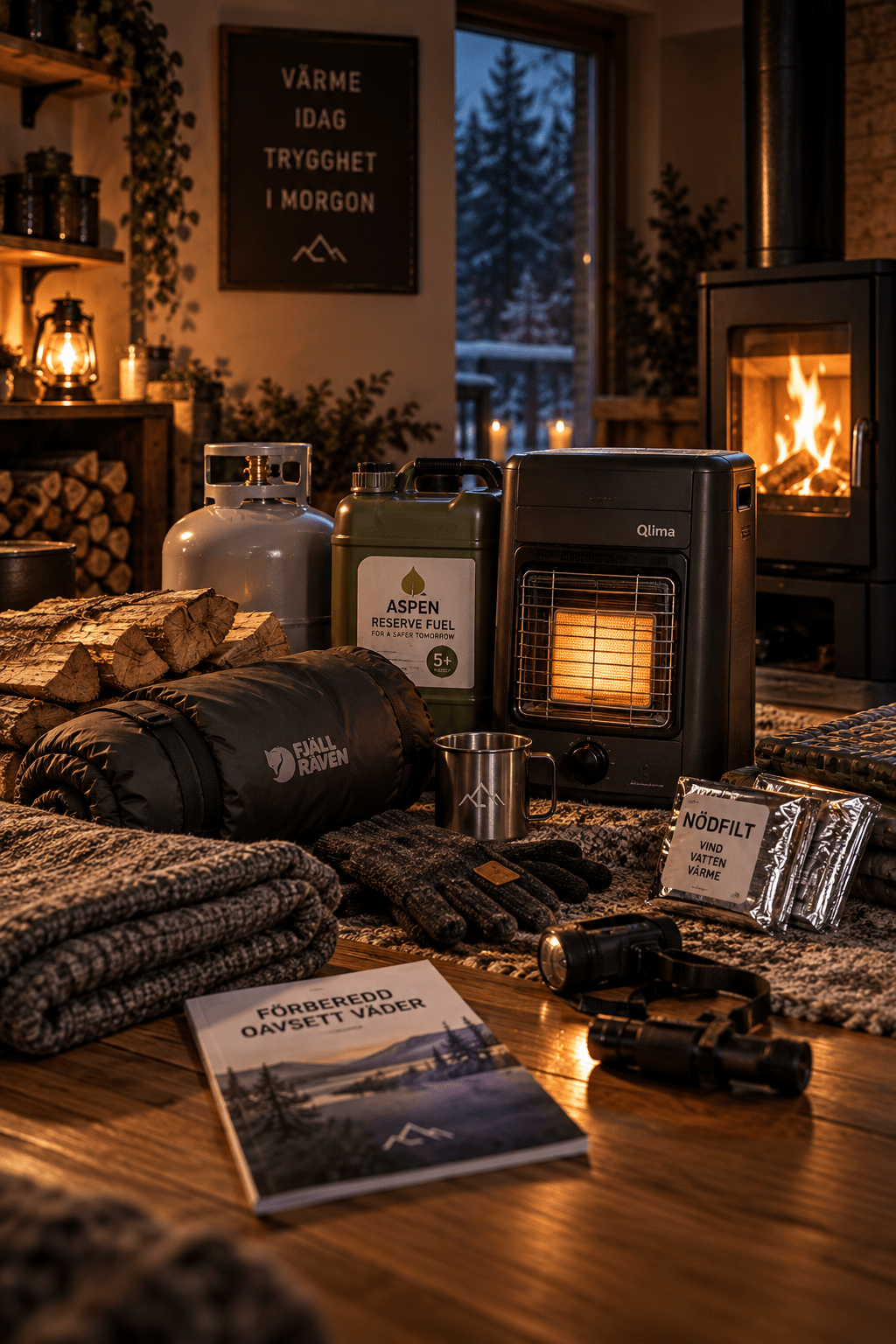
Emergency Kit – Get Prepared Before You Need It
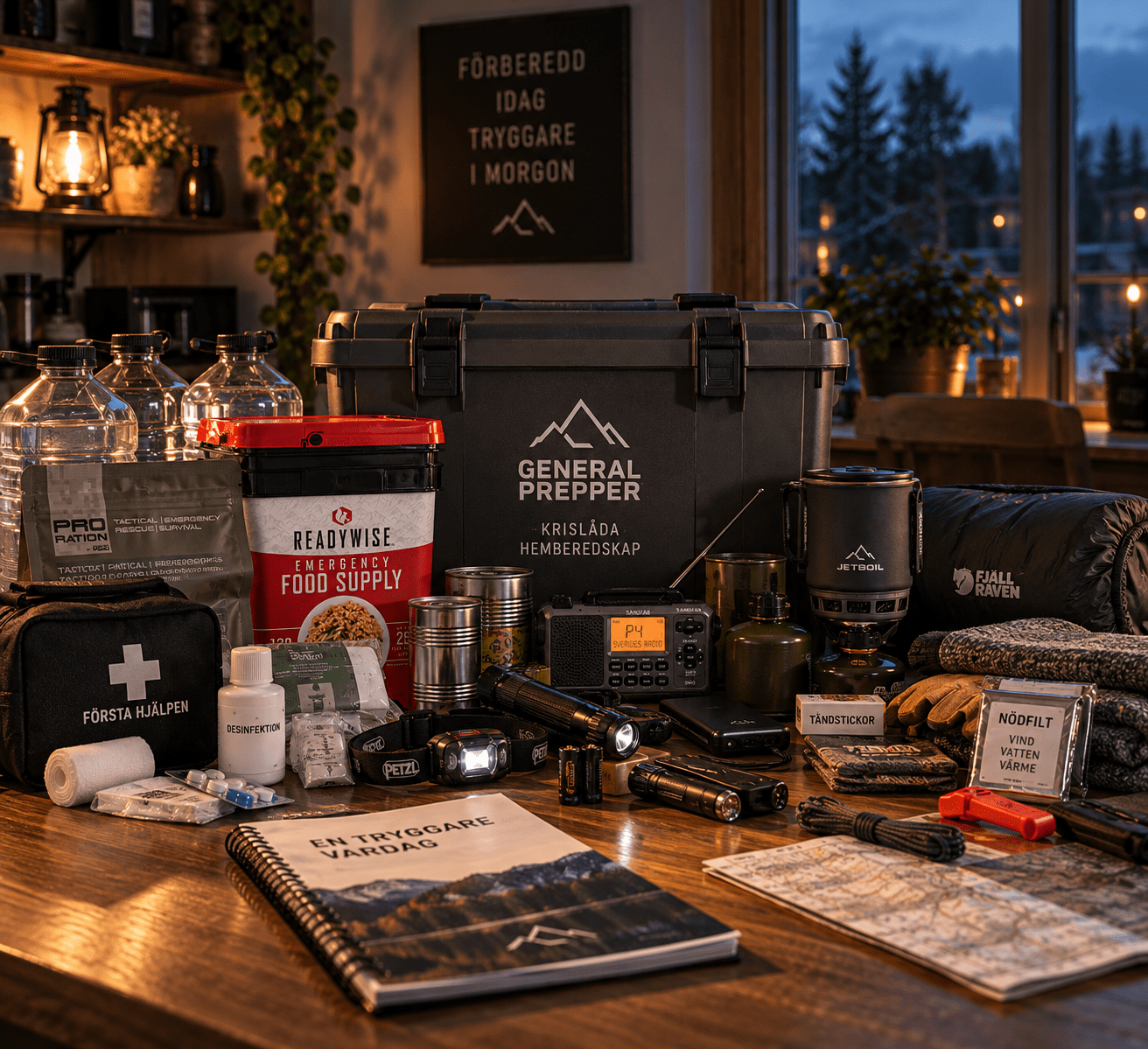
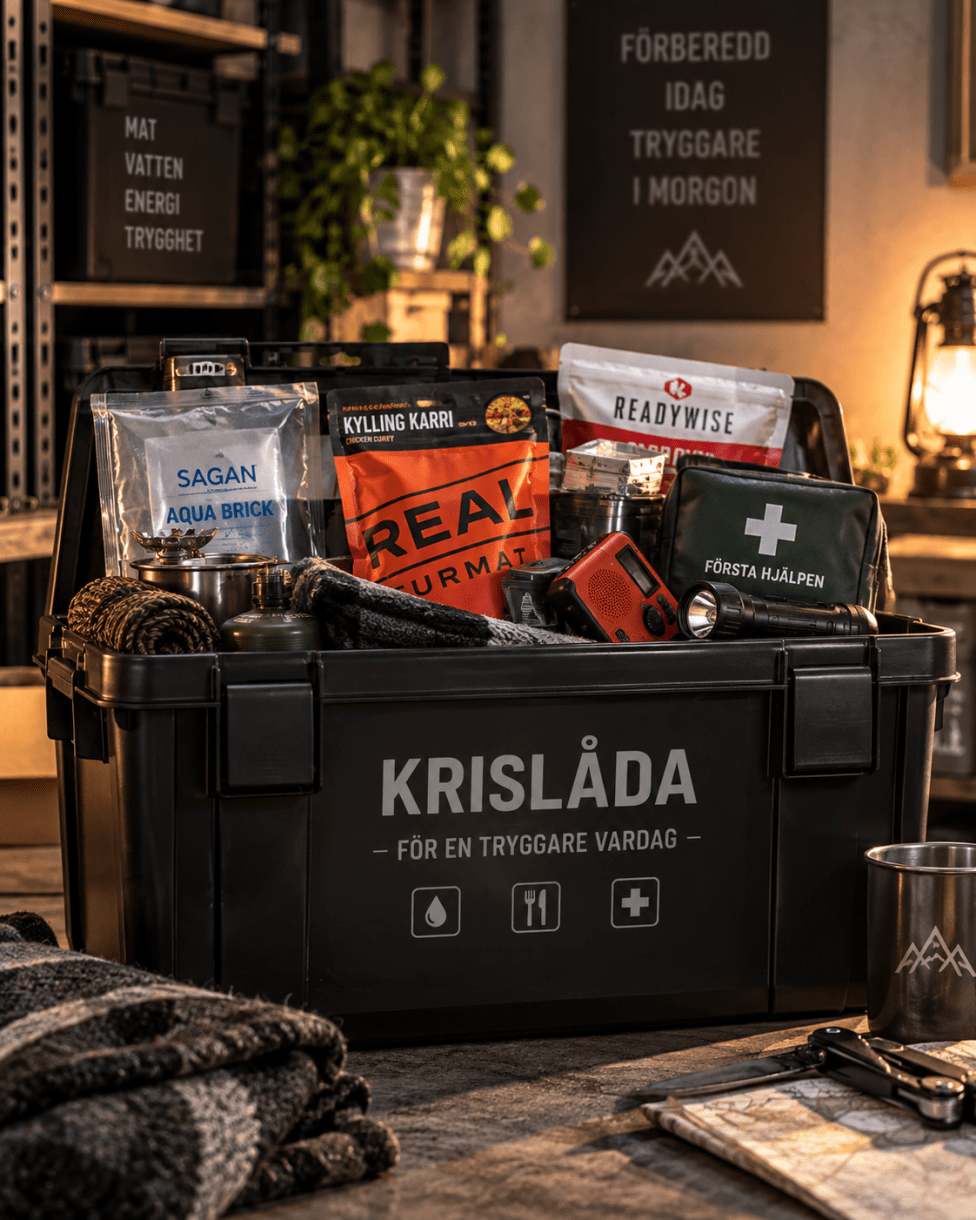
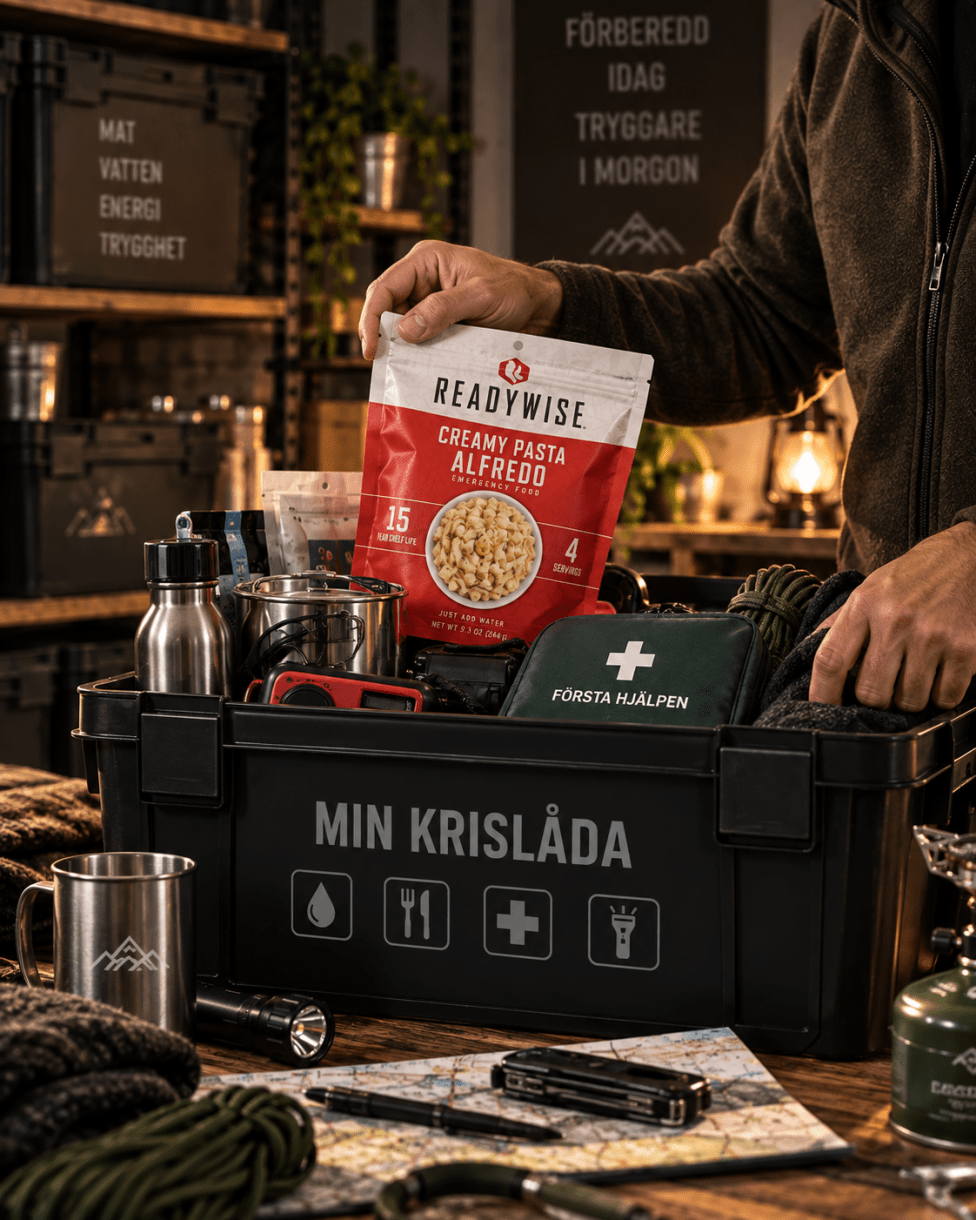
An emergency kit is a simple way to organise your home preparedness.
The idea is not that absolutely everything you need during an emergency has to fit into a physical box. Your water may be stored in the storage room, food in the pantry, sleeping bags in the wardrobe and backup power somewhere else.
What matters is that you have what you need, know where it is and can use it when everyday life is disrupted.
Authorities recommend that households maintain a level of home preparedness that allows them to meet their basic needs for at least one week.
Good emergency preparedness should primarily cover:
✦ Water and food
✦ Warmth and lighting
✦ Information and communication
✦ First aid, hygiene and personal needs
Start with your needs – not the equipment
It is easy to start at the wrong end and focus on which products should be included in an emergency kit.
Instead, start by asking:
What does our household need to manage for a week if electricity, water, internet access or other essential services are disrupted?
When you start with your needs rather than the products, it becomes much easier to determine what you already have – and what is actually missing.
What should your emergency preparedness include?
Needs vary between households, but some areas are common to almost all home preparedness plans.
Water
Keep drinking water stored and have containers available to collect more. The ability to purify water provides additional resilience during longer disruptions.
Food
Keep enough food for at least one week and plan how you will prepare it. Consider combining everyday food with foods requiring minimal preparation and products with a long shelf life.
Warmth
Warm clothing, blankets, sleeping bags and sleeping mats provide a good foundation. Depending on your home and circumstances, a safe alternative heat source can provide additional resilience.
Information
Make sure you can receive important information even when internet access or mobile networks are disrupted. A radio, backup power and a plan for how your family will stay in contact are important components.
First aid & hygiene
Keep equipment for minor injuries and basic first aid readily available. Also plan for hygiene and toilet needs if the water supply is disrupted.
Lighting & backup power
Torches, headlamps and lanterns make a power outage easier and safer to manage. Power banks, batteries and other backup power solutions help keep essential electronics running.
Do not forget personal needs
A general checklist is only a starting point. A good emergency kit needs to be adapted to the people who will actually use it.
Does anyone need prescription medication? Are there young children, elderly people or people with special needs? Do you need glasses, hygiene products, menstrual products or other personal equipment?
Do not forget your pets either.
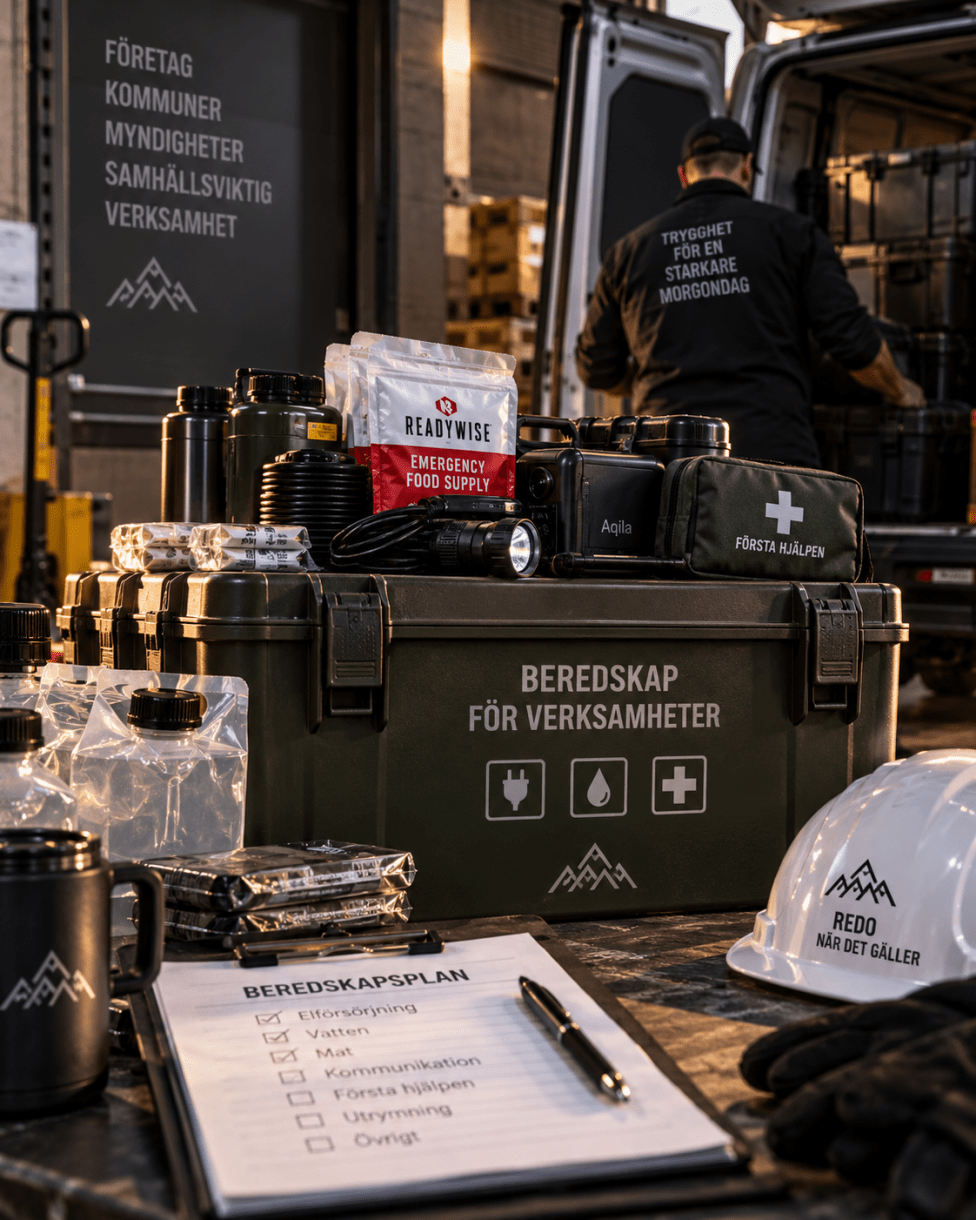
The same principle applies to workplaces and organisations on a larger scale. The number of people, working environment, premises, special requirements and the organisation's resilience needs all affect what equipment needs to be available.
A ready-made checklist can show you what to consider. It cannot know exactly what you need.
You probably already have a lot at home
Building an emergency kit does not mean everything needs to be bought new.
Start by going through your home. You may already have sleeping bags, torches, a camping stove, a thermos, a first aid kit, power banks, blankets and much of the food you need.
Gather together the items that make sense to keep in one place and make a list of anything stored elsewhere.
It will then become clear what is actually missing.
Ready-made emergency kit or build your own?
Both options work. The difference mainly depends on how much you already have and how much you want to select and customise yourself.
Ready-made emergency kit
A simple way to quickly obtain a basic set of emergency preparedness equipment. The contents should then be supplemented according to the number of people, your home, the season and individual needs.
Build your own
Gives you greater freedom to choose each component yourself and is particularly suitable if you already have a lot of equipment at home.
What matters is not whether your emergency kit comes ready-packed or is built up over time. What matters is that it meets your actual needs.
Start simple and build from there
You do not need to create complete emergency preparedness in a single day. Start with the most basic needs and build from there.
Take stock
Review what you already have and where your equipment is stored.
Identify the gaps
Plan for at least one week and identify which basic needs you are not yet able to meet.
Fill the gaps
Prioritise the essentials first and build from there based on your actual circumstances.
Find the right emergency kit and equipment
You can build your preparedness yourself, start with a ready-made emergency kit or combine both approaches. We have brought together equipment for both individual households and larger-scale needs.
An emergency kit is not about preparing for one specific disaster. It is about being able to continue taking care of yourself and the people around you when everyday life is disrupted.