Emergency Kit Checklist
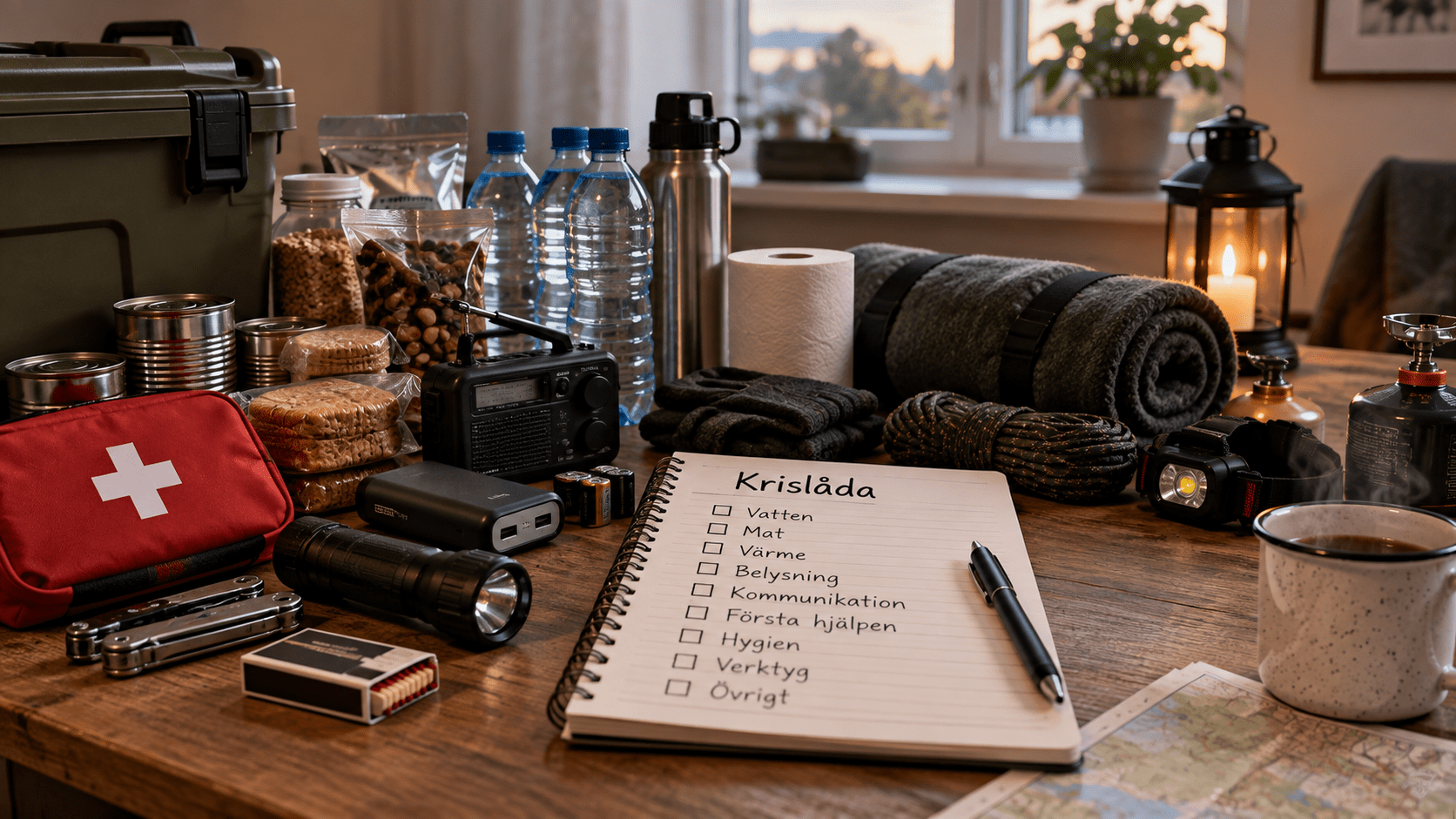
An emergency kit does not need to be complicated or contain lots of specialist equipment. Much of what you need during an extended power outage or another disruption to society is probably already at home.
The important thing is that for a period of time you can meet some basic needs even when society is not functioning as usual: water, food, warmth, information, lighting and hygiene.
Use the checklist below to review what you already have and add anything that is missing.
Start at home – not in the shop.
Preparedness is not about buying as much as possible. Start by taking stock of your cupboards, drawers and storage spaces. A blanket is a blanket, a torch is a torch, and the food you already have at home counts too.
Water – the most important thing to address first
Drinking water is one of the first needs to plan for. During an extended power outage or a disruption to the water supply, for example, access to tap water may be affected.
Therefore, keep water at home and also consider how you can obtain more if your stored water runs out.
Checklist – water
- ☐ Water in containers or PET bottles
- ☐ Water containers for collecting and transporting water
- ☐ Water filter or another method of water purification
- ☐ Container for boiling water
- ☐ Camping stove or another safe way to heat water
- ☐ A plan for where you can collect water if the tap is not working
How much you need depends on your household and the situation. Do not only calculate drinking water – water is also needed for cooking and basic hygiene, for example.
Learn more: → Water preparedness – storing and purifying water
View the range: → Water purification & storage
Food – things you can and actually want to eat
Checklist – food
- ☐ Canned food and other ready-to-eat food
- ☐ Freeze-dried food
- ☐ Rice, pasta, grains and other staples
- ☐ Beans, lentils and other shelf-stable protein sources
- ☐ Snacks, energy bars or other energy-dense foods
- ☐ Food for special dietary requirements
- ☐ Food and any necessary supplies for children
- ☐ Pet food
- ☐ Manual can opener
- ☐ Camping stove or another alternative way to cook
- ☐ Fuel suitable for the equipment
Choose foods that you also eat in everyday life. This makes it easier to rotate your supplies and reduce food waste.
For longer-term storage, there is also emergency food with a long shelf life, with some products designed to be stored for many years.
Learn more: → Food preparedness – planning food when everyday life is disrupted
View the range: → Emergency food with a long shelf life · Freeze-dried food · Field rations
Warmth – retain heat before trying to create more
During an extended power outage in winter, your home may gradually become cold. Start by trying to retain the heat that is already there.
Gather the household in a smaller room, close doors to the rest of the home and use blankets, warm clothing and sleeping bags. Rugs and blankets can also help reduce the feeling of cold floors and surfaces.
Checklist – warmth
- ☐ Warm clothing and base layers
- ☐ Hats, gloves and warm socks
- ☐ Blankets
- ☐ Sleeping bags
- ☐ Sleeping mats
- ☐ Alternative heat source where it can be used safely
- ☐ Fuel intended for the heat source
- ☐ Matches or lighter
Never use barbecues or equipment intended for outdoor use indoors. Combustion can create both a fire hazard and a risk of carbon monoxide poisoning. Always follow the manufacturer's safety instructions for alternative heat sources.
Learn more: → Keeping warm during a power outage
View the range: → Heating, power and lighting
Lighting and backup power
A power outage is much easier to manage if you can see what you are doing and keep a few important devices charged.
Torches and headlamps are often more practical than candles and do not pose the same fire risk.
Checklist – power and lighting
- ☐ Torches
- ☐ Headlamps
- ☐ Spare batteries
- ☐ Charged power banks
- ☐ Charging cables for important devices
- ☐ Larger backup power supply/power station if needed
Consider what actually needs electricity. Mobile phones and lighting require relatively little energy, while heating, for example, requires considerably more.
View the range: → Power, heating & lighting · Backup power
Information and communication
During a disruption to society, you need to be able to receive information even if internet access or the electricity supply is affected.
Sveriges Radio P4 is an important information channel during emergencies. A radio that does not depend on a wall socket is therefore a useful complement to your mobile phone.
Checklist – information
- ☐ Battery-powered radio or hand-crank radio
- ☐ Spare batteries
- ☐ Mobile phone
- ☐ Power bank
- ☐ Important phone numbers written down on paper
- ☐ Information about your municipality's local information channels
- ☐ Map of the local area
Plan for multiple ways to receive information. Mobile networks, internet access and electricity can be affected in different ways, while a radio provides an additional way to receive information.
Learn more: → Information and communication during an emergency
View the range: → Radio & communication
First aid and medication
Minor injuries can occur even when the rest of society is functioning normally. During a disruption, being able to treat minor wounds and injuries at home becomes even more valuable.
Checklist – first aid
- ☐ First aid kit
- ☐ Plasters
- ☐ Compresses and dressings
- ☐ Wound cleanser
- ☐ Disposable gloves
- ☐ Scissors and tweezers
- ☐ Over-the-counter medicines normally used by the household
- ☐ Essential personal medication
Check the contents regularly and replace products and medicines that have passed their expiry date.
Learn more: → First aid for home preparedness
View the range: → First aid
Hygiene and sanitation
If the water supply stops working, it affects more than just drinking water. It may also become difficult to flush the toilet, wash your hands and maintain daily hygiene.
Checklist – hygiene
- ☐ Toilet paper
- ☐ Wet wipes
- ☐ Hand sanitiser
- ☐ Soap
- ☐ Heavy-duty waste bags
- ☐ Bucket or another emergency toilet solution
- ☐ Menstrual products and other personal hygiene items
- ☐ Nappies and other products for children if needed
A simple emergency toilet solution is easy to prepare in advance and considerably harder to improvise once the water supply and sewage system have already stopped working.
View the range: → Hygiene & sanitation
Practical things that are easy to forget
An emergency kit is not just about products. A few simple preparations can be just as useful.
Checklist – other essentials
- ☐ Cash in small denominations
- ☐ Copies or details of important documents
- ☐ Important phone numbers on paper
- ☐ Local map
- ☐ Spare keys
- ☐ Batteries
- ☐ Tape, string and basic tools
- ☐ Fire extinguisher and fire blanket
- ☐ Food, water and equipment for pets
- ☐ A plan for how household members will contact each other if the mobile network is unavailable
Does everything need to be kept in one box?
No.
The term emergency kit is practical, but your home preparedness supplies do not need to fit into a physical box.
Your water containers might be in the storage room. The food is in the pantry. The sleeping bags are in the wardrobe. The camping stove is stored with your outdoor equipment and the radio is in the kitchen.
What matters is not where the items are stored, but that you know what you have, where it is and how to use it.
It is also wise to distinguish between home preparedness and evacuation. The equipment you need to cope with an extended disruption at home is not necessarily the same as what you would want to carry if you had to leave your home quickly.
Internal link: → Evacuation bag – what should you take with you?
Start with the essentials
If the checklist feels long, you do not need to tackle everything at once.
Start with water, food, warmth, information and lighting. Then review hygiene, first aid and other equipment.
The most important thing about an emergency kit is not that it is perfect.
It is that it is there when everyday life is disrupted
Want to take the next step?
Build your emergency kit →